SOLDES
Jusqu'à -70% sur une sélection d'articles*

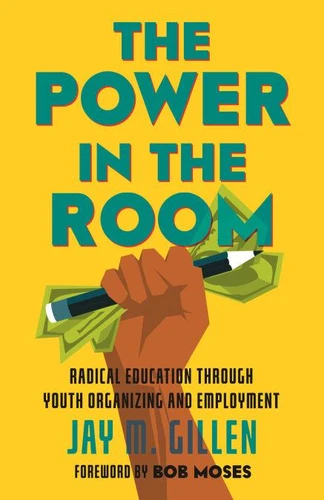
The Power in the Room. Radical Education Through Youth Organizing and Employment
Par :Formats :
Disponible dans votre compte client Decitre ou Furet du Nord dès validation de votre commande. Le format ePub protégé est :
- Compatible avec une lecture sur My Vivlio (smartphone, tablette, ordinateur)
- Compatible avec une lecture sur liseuses Vivlio
- Pour les liseuses autres que Vivlio, vous devez utiliser le logiciel Adobe Digital Edition. Non compatible avec la lecture sur les liseuses Kindle, Remarkable et Sony
- Non compatible avec un achat hors France métropolitaine
 , qui est-ce ?
Notre partenaire de plateforme de lecture numérique où vous retrouverez l'ensemble de vos ebooks gratuitement
Pour en savoir plus sur nos ebooks, consultez notre aide en ligne ici
C'est si simple ! Lisez votre ebook avec l'app Vivlio sur votre tablette, mobile ou ordinateur :

- Nombre de pages200
- FormatePub
- ISBN978-0-8070-6470-2
- EAN9780807064702
- Date de parution24/09/2019
- Protection num.Adobe DRM
- Taille754 Ko
- Infos supplémentairesepub
- ÉditeurBeacon Press
Résumé
How community-centered, peer-to-peer, youth knowledge exchanges are evolving into a strong economic and political foundation on which to build radical public education. Following in the rich traditions in African American cooperative economic and educational thought, teacher-organizer Jay Gillen describes the Baltimore Algebra Project (BAP) as a youth-run cooperative enterprise in which young people direct their peers' and their own learning for a wage.
BAP and similar enterprises are creating an educational network of empowered, employed students. Gillen argues that this is a proactive political, economic, and educational structure that builds relationships among and between students and their communities. It's a structure that meets communal needs-material and social, economic and political-both now and in the future. Through the story of the Baltimore Algebra Project, readers will learn why youth employment is a priority, how to develop democratic norms and cultures, how to foster positive community roles for 20-30 year-olds, and how to implement educational accountability from below.
BAP and similar enterprises are creating an educational network of empowered, employed students. Gillen argues that this is a proactive political, economic, and educational structure that builds relationships among and between students and their communities. It's a structure that meets communal needs-material and social, economic and political-both now and in the future. Through the story of the Baltimore Algebra Project, readers will learn why youth employment is a priority, how to develop democratic norms and cultures, how to foster positive community roles for 20-30 year-olds, and how to implement educational accountability from below.