SOLDES
Jusqu'à -70% sur une sélection d'articles*

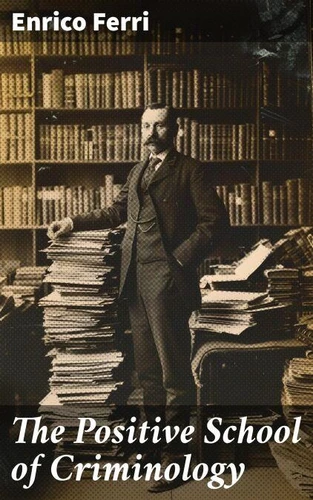
The Positive School of Criminology. Exploring the Intersection of Biology, Psychology, and Society in Criminal Behavior
Par :Formats :
Disponible dans votre compte client Decitre ou Furet du Nord dès validation de votre commande. Le format ePub est :
- Compatible avec une lecture sur My Vivlio (smartphone, tablette, ordinateur)
- Compatible avec une lecture sur liseuses Vivlio
- Pour les liseuses autres que Vivlio, vous devez utiliser le logiciel Adobe Digital Edition. Non compatible avec la lecture sur les liseuses Kindle, Remarkable et Sony
 , qui est-ce ?
Notre partenaire de plateforme de lecture numérique où vous retrouverez l'ensemble de vos ebooks gratuitement
Pour en savoir plus sur nos ebooks, consultez notre aide en ligne ici
C'est si simple ! Lisez votre ebook avec l'app Vivlio sur votre tablette, mobile ou ordinateur :

- Nombre de pages62
- FormatePub
- ISBN859-65--4750614-0
- EAN8596547506140
- Date de parution12/08/2023
- Protection num.Digital Watermarking
- Taille561 Ko
- Infos supplémentairesepub
- ÉditeurGOOD PRESS
Résumé
In "The Positive School of Criminology, " Enrico Ferri explores the intersection of sociology and criminal justice, arguing for a scientific approach to understanding criminal behavior. Within the literary context of late 19th-century positivism, Ferri's work reflects a departure from purely philosophical interpretations of crime, embracing empirical methodologies and social sciences to elucidate the factors influencing criminality.
His rigorous analysis of environmental influences, biological predispositions, and psychological elements provides a pioneering framework that aligns with contemporary criminological discourse, challenging prevailing legalistic views of punishment and deterrence. Enrico Ferri, a prominent figure in Italian criminology, was greatly influenced by the socio-political landscape of his time. As a student of Cesare Lombroso, Ferri's dedication to empirical research informed his belief that criminal behavior is determined by a complex interplay of social and biological variables.
His broader interest in social reform and public welfare underpins the urgency of his arguments, advocating for a justice system that addresses root causes rather than solely punishing offenders. Ferri's "The Positive School of Criminology" is essential reading for anyone seeking to comprehend the evolution of criminological thought. By situating crime within its broader social context, this text not only enriches our understanding of criminal behavior but also calls for a transformative approach to justice that resonates in contemporary discussions about rehabilitation and prevention.
His rigorous analysis of environmental influences, biological predispositions, and psychological elements provides a pioneering framework that aligns with contemporary criminological discourse, challenging prevailing legalistic views of punishment and deterrence. Enrico Ferri, a prominent figure in Italian criminology, was greatly influenced by the socio-political landscape of his time. As a student of Cesare Lombroso, Ferri's dedication to empirical research informed his belief that criminal behavior is determined by a complex interplay of social and biological variables.
His broader interest in social reform and public welfare underpins the urgency of his arguments, advocating for a justice system that addresses root causes rather than solely punishing offenders. Ferri's "The Positive School of Criminology" is essential reading for anyone seeking to comprehend the evolution of criminological thought. By situating crime within its broader social context, this text not only enriches our understanding of criminal behavior but also calls for a transformative approach to justice that resonates in contemporary discussions about rehabilitation and prevention.