SOLDES
Jusqu'à -70% sur une sélection d'articles*

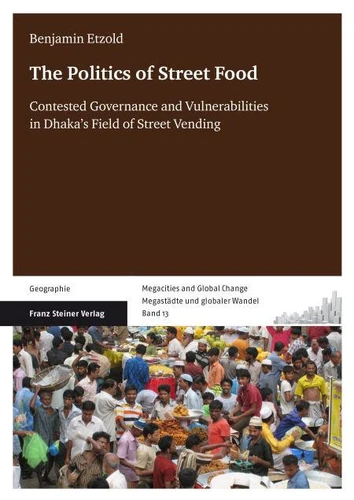
The Politics of Street Food. Contested Governance and Vulnerabilities in Dhaka's Field of Street Vending
Par :Formats :
Disponible dans votre compte client Decitre ou Furet du Nord dès validation de votre commande. Le format PDF est :
- Compatible avec une lecture sur My Vivlio (smartphone, tablette, ordinateur)
- Compatible avec une lecture sur liseuses Vivlio
- Pour les liseuses autres que Vivlio, vous devez utiliser le logiciel Adobe Digital Edition. Non compatible avec la lecture sur les liseuses Kindle, Remarkable et Sony
 , qui est-ce ?
Notre partenaire de plateforme de lecture numérique où vous retrouverez l'ensemble de vos ebooks gratuitement
Pour en savoir plus sur nos ebooks, consultez notre aide en ligne ici
C'est si simple ! Lisez votre ebook avec l'app Vivlio sur votre tablette, mobile ou ordinateur :

- Nombre de pages404
- FormatPDF
- ISBN978-3-515-10622-1
- EAN9783515106221
- Date de parution12/08/2014
- Protection num.Digital Watermarking
- Taille14 Mo
- Infos supplémentairespdf
- ÉditeurFranz Steiner
Résumé
In Bangladesh, the sale of food in public space is often contested: Street food is needed, but not wanted. 100, 000 street vendors sell dishes, snacks, fruits, and beverages in the megacity of Dhaka. Street food is important for urban food security as mobile labourers and the poor rely on cheap, readily available and nutritious food. The authorities argue that encroachments of streets and footpaths are illegal and disorderly, and that street food is unhygienic.
They therefore evict the vendors regularly. But the hawkers are somewhat protected through the informal rules of the street. While some of them are highly vulnerable to poverty and police raids, most navigate well through these contested governance regimes and can successfully sustain their livelihoods. In this e-book, different conceptual perspectives are integrated on the basis of Bourdieu's Theory of Practice.
It provides fresh insights into the role of street food in urban food system and contributes to a deeper understanding of the vulnerabilities of the urban poor, the informal governance of public space, and the dominant discourses on street food. From a relational and critical perspective it captures "the politics of street food" and sketches innovative solutions towards fair street food governance.
They therefore evict the vendors regularly. But the hawkers are somewhat protected through the informal rules of the street. While some of them are highly vulnerable to poverty and police raids, most navigate well through these contested governance regimes and can successfully sustain their livelihoods. In this e-book, different conceptual perspectives are integrated on the basis of Bourdieu's Theory of Practice.
It provides fresh insights into the role of street food in urban food system and contributes to a deeper understanding of the vulnerabilities of the urban poor, the informal governance of public space, and the dominant discourses on street food. From a relational and critical perspective it captures "the politics of street food" and sketches innovative solutions towards fair street food governance.