SOLDES
Jusqu'à -70% sur une sélection d'articles*

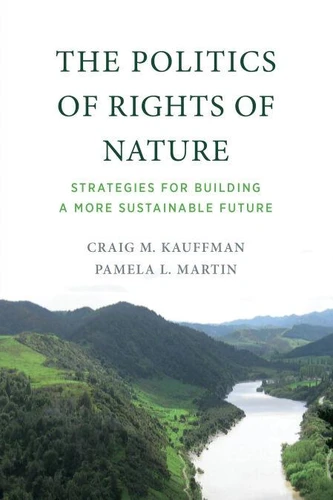
The Politics of Rights of Nature. Strategies for Building a More Sustainable Future
Par : ,Formats :
Disponible dans votre compte client Decitre ou Furet du Nord dès validation de votre commande. Le format ePub protégé est :
- Compatible avec une lecture sur My Vivlio (smartphone, tablette, ordinateur)
- Compatible avec une lecture sur liseuses Vivlio
- Pour les liseuses autres que Vivlio, vous devez utiliser le logiciel Adobe Digital Edition. Non compatible avec la lecture sur les liseuses Kindle, Remarkable et Sony
- Non compatible avec un achat hors France métropolitaine
 , qui est-ce ?
Notre partenaire de plateforme de lecture numérique où vous retrouverez l'ensemble de vos ebooks gratuitement
Pour en savoir plus sur nos ebooks, consultez notre aide en ligne ici
C'est si simple ! Lisez votre ebook avec l'app Vivlio sur votre tablette, mobile ou ordinateur :

- Nombre de pages290
- FormatePub
- ISBN978-0-262-36659-5
- EAN9780262366595
- Date de parution17/08/2021
- Protection num.Adobe DRM
- Taille8 Mo
- Infos supplémentairesepub
- ÉditeurThe MIT Press
Résumé
How Rights of Nature laws are transforming governance to address environmental crises through more ecologically sustainable approaches to development. With the window of opportunity to take meaningful action on climate change and mass extinction closing, a growing number of communities, organizations, and governments around the world are calling for Rights of Nature (RoN) to be legally recognized.
RoN advocates are creating new laws that recognize natural ecosystems as subjects with inherent rights, and appealing to courts to protect those rights. Going beyond theory and philosophy, in this book Craig Kauffman and Pamela Martin analyze the politics behind the creation and implementation of these laws, as well as the effects of the laws on the politics of sustainable development. Kauffman and Martin tell how community activists, lawyers, judges, scientists, government leaders, and ordinary citizens have formed a global movement to advance RoN as a solution to the environmental crises facing the planet.
They compare successful and failed attempts to implement RoN at various levels of government in six countries--Bolivia, Colombia, Ecuador, India, New Zealand, and the United States--asking why these laws emerged and proliferated in the mid-2000s, why they construct RoN differently, and why some efforts at implementation are more successful than others. As they analyze efforts to use RoN as a tool for constructing more ecocentric sustainable development, capable of achieving the 2030 Agenda for Sustainable Development goal of living "in harmony with Nature, " Kauffman and Martin show how RoN jurisprudence evolves through experimentation and reshapes the debates surrounding sustainable development.
RoN advocates are creating new laws that recognize natural ecosystems as subjects with inherent rights, and appealing to courts to protect those rights. Going beyond theory and philosophy, in this book Craig Kauffman and Pamela Martin analyze the politics behind the creation and implementation of these laws, as well as the effects of the laws on the politics of sustainable development. Kauffman and Martin tell how community activists, lawyers, judges, scientists, government leaders, and ordinary citizens have formed a global movement to advance RoN as a solution to the environmental crises facing the planet.
They compare successful and failed attempts to implement RoN at various levels of government in six countries--Bolivia, Colombia, Ecuador, India, New Zealand, and the United States--asking why these laws emerged and proliferated in the mid-2000s, why they construct RoN differently, and why some efforts at implementation are more successful than others. As they analyze efforts to use RoN as a tool for constructing more ecocentric sustainable development, capable of achieving the 2030 Agenda for Sustainable Development goal of living "in harmony with Nature, " Kauffman and Martin show how RoN jurisprudence evolves through experimentation and reshapes the debates surrounding sustainable development.