SOLDES
Jusqu'à -70% sur une sélection d'articles*

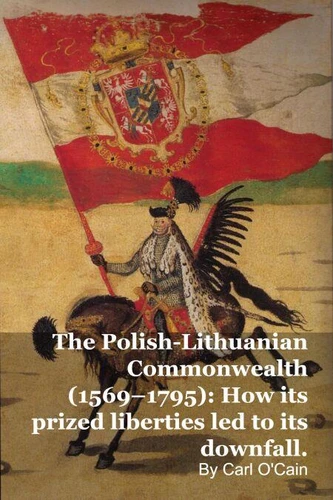
The Polish-Lithuanian Commonwealth (1569–1795): How its prized liberties led to its downfall
Par :Formats :
Disponible dans votre compte client Decitre ou Furet du Nord dès validation de votre commande. Le format ePub est :
- Compatible avec une lecture sur My Vivlio (smartphone, tablette, ordinateur)
- Compatible avec une lecture sur liseuses Vivlio
- Pour les liseuses autres que Vivlio, vous devez utiliser le logiciel Adobe Digital Edition. Non compatible avec la lecture sur les liseuses Kindle, Remarkable et Sony
 , qui est-ce ?
Notre partenaire de plateforme de lecture numérique où vous retrouverez l'ensemble de vos ebooks gratuitement
Pour en savoir plus sur nos ebooks, consultez notre aide en ligne ici
C'est si simple ! Lisez votre ebook avec l'app Vivlio sur votre tablette, mobile ou ordinateur :

- FormatePub
- ISBN8233514777
- EAN9798233514777
- Date de parution07/01/2026
- Protection num.pas de protection
- Infos supplémentairesepub
- ÉditeurLinda Balsamo
Résumé
The Polish-Lithuanian Commonwealth (1569-1795): How its prized liberties led to its downfall. The Polish-Lithuanian Commonwealth was one of Europe's largest and most innovative states-a pioneer of constitutional monarchy, religious tolerance, and aristocratic republicanism that stretched from the Baltic to the Black Sea. Yet by 1795, it had been completely erased from the map by Russia, Prussia, and Austria.
This comprehensive history reveals how the Commonwealth's devotion to "Golden Liberty" became its death sentence. The Liberum Veto allowed any single nobleman to paralyze government. Extreme decentralization prevented state-building. Economic stagnation followed the collapse of grain exports. Magnate oligarchs wielded near-sovereign power while blocking reforms. Foreign powers-especially Russia-systematically exploited these weaknesses, transforming internal dysfunctions into tools of external control.
Through detailed analysis of constitutional structure, economic foundations, military campaigns, and diplomatic betrayals, this book demonstrates how a state that prioritized liberty above all else ultimately lost both freedom and sovereignty. From the Union of Lublin to Sobieski's victory at Vienna, from the progressive Constitution of May 3 to the brutal suppression of the Kosciuszko Uprising, this is the tragic story of how republican ideals without effective government led to national extinction-and the lessons this holds for understanding state survival, institutional design, and the perennial tension between liberty and authority.
This comprehensive history reveals how the Commonwealth's devotion to "Golden Liberty" became its death sentence. The Liberum Veto allowed any single nobleman to paralyze government. Extreme decentralization prevented state-building. Economic stagnation followed the collapse of grain exports. Magnate oligarchs wielded near-sovereign power while blocking reforms. Foreign powers-especially Russia-systematically exploited these weaknesses, transforming internal dysfunctions into tools of external control.
Through detailed analysis of constitutional structure, economic foundations, military campaigns, and diplomatic betrayals, this book demonstrates how a state that prioritized liberty above all else ultimately lost both freedom and sovereignty. From the Union of Lublin to Sobieski's victory at Vienna, from the progressive Constitution of May 3 to the brutal suppression of the Kosciuszko Uprising, this is the tragic story of how republican ideals without effective government led to national extinction-and the lessons this holds for understanding state survival, institutional design, and the perennial tension between liberty and authority.