SOLDES
Jusqu'à -70% sur une sélection d'articles*

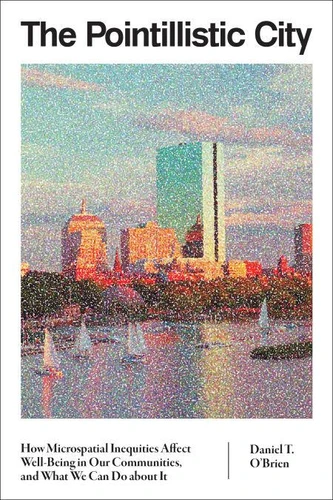
The Pointillistic City. How Microspatial Inequities Affect Well-Being in Our Communities, and What We Can Do about It
Par :Formats :
Disponible dans votre compte client Decitre ou Furet du Nord dès validation de votre commande. Le format ePub protégé est :
- Compatible avec une lecture sur My Vivlio (smartphone, tablette, ordinateur)
- Compatible avec une lecture sur liseuses Vivlio
- Pour les liseuses autres que Vivlio, vous devez utiliser le logiciel Adobe Digital Edition. Non compatible avec la lecture sur les liseuses Kindle, Remarkable et Sony
- Non compatible avec un achat hors France métropolitaine
 , qui est-ce ?
Notre partenaire de plateforme de lecture numérique où vous retrouverez l'ensemble de vos ebooks gratuitement
Pour en savoir plus sur nos ebooks, consultez notre aide en ligne ici
C'est si simple ! Lisez votre ebook avec l'app Vivlio sur votre tablette, mobile ou ordinateur :

- Nombre de pages342
- FormatePub
- ISBN978-0-262-38120-8
- EAN9780262381208
- Date de parution21/01/2025
- Protection num.Adobe DRM
- Taille22 Mo
- Infos supplémentairesepub
- ÉditeurThe MIT Press
Résumé
A new paradigm of research, policy, and practice that acknowledges the multiple scales at which we live every day. The Pointillistic City explores the multilayer geography of our daily lives-specifically, how we simultaneously live at the scales of addresses, streets, and neighborhoods and how each can be relevant for our well-being. Not unlike the way in which we look at a pointillistic painting, which depicts a full scene through the detailed organization of multiple objects, Daniel T.
O'Brien considers the three scales together and the comprehensive understanding of the city they offer. The pointillistic approach to the city contrasts with decades of focus on neighborhoods. As such, it surfaces microspatial inequities, or disparities in experiences between people living in the same neighborhood, even right around the corner from each other. Microspatial inequities have gone largely unnoticed to date, and their recognition offers a new approach to understanding and supporting the diverse population of the city.
This book illustrates the pointillistic perspective on cities with two in-depth case studies-one on crime, the other on environmental justice-in Boston. These studies highlight microspatial inequities and their interplay with broader neighborhood conditions, and they go even further by demonstrating how these insights can be incorporated into a new generation of policies and practices that are science driven and community led, truly addressing disparities both between and within our communities.
O'Brien considers the three scales together and the comprehensive understanding of the city they offer. The pointillistic approach to the city contrasts with decades of focus on neighborhoods. As such, it surfaces microspatial inequities, or disparities in experiences between people living in the same neighborhood, even right around the corner from each other. Microspatial inequities have gone largely unnoticed to date, and their recognition offers a new approach to understanding and supporting the diverse population of the city.
This book illustrates the pointillistic perspective on cities with two in-depth case studies-one on crime, the other on environmental justice-in Boston. These studies highlight microspatial inequities and their interplay with broader neighborhood conditions, and they go even further by demonstrating how these insights can be incorporated into a new generation of policies and practices that are science driven and community led, truly addressing disparities both between and within our communities.