
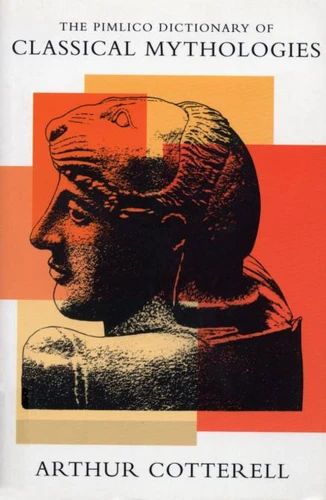
The Pimlico Dictionary Of Classical Mythologies
Par :Formats :
Disponible dans votre compte client Decitre ou Furet du Nord dès validation de votre commande. Le format ePub protégé est :
- Compatible avec une lecture sur My Vivlio (smartphone, tablette, ordinateur)
- Compatible avec une lecture sur liseuses Vivlio
- Pour les liseuses autres que Vivlio, vous devez utiliser le logiciel Adobe Digital Edition. Non compatible avec la lecture sur les liseuses Kindle, Remarkable et Sony
- Non compatible avec un achat hors France métropolitaine
 , qui est-ce ?
Notre partenaire de plateforme de lecture numérique où vous retrouverez l'ensemble de vos ebooks gratuitement
Pour en savoir plus sur nos ebooks, consultez notre aide en ligne ici
C'est si simple ! Lisez votre ebook avec l'app Vivlio sur votre tablette, mobile ou ordinateur :

- Nombre de pages320
- FormatePub
- ISBN978-1-4481-2996-6
- EAN9781448129966
- Date de parution31/01/2012
- Protection num.Adobe DRM
- Infos supplémentairesepub
- ÉditeurVintage Digital
Résumé
The Pimlico Dictionary of Classical Mythologies is a unique work of reference which breaks new ground by treating for the first time the classical mythologies of the Old World as a whole. Never before have the mythologies of Greece, Rome, Persia, India and China been encompassed in a single volume, despite the fact that the first four have much in common through their Indo-European ancestry. Arthur Cotterell shows how much more can be understood about 'classical mythology' by comparison and contrast of its five major traditions.
Another key aspect of The Pimlico Dictionary of Classical Mythologies is that the myths are not simply recounted; their least accessible features are helpfully interpreted by reference to the culture in which they arose. Thus, for example, the profound influence of the Iranian prophet Zoroaster's thinking on Persian mythology is made clear, along with the far-reaching consequences its adoption would later have for Christian thought.
The Pimlico Dictionary of Classical Mythologies also includes over two hundred original illustrations, which have been specially commissioned in order to reveal how gods and goddesses, heroes and heroines, sages, villains and demons were actually envisaged during the classical period. Taken together with the well-devised entries and the informative introduction, these unusual illustrations make The Pimlico Dictionary of Classical Mythologies an indispensable handbook for both students and the general reader.
Another key aspect of The Pimlico Dictionary of Classical Mythologies is that the myths are not simply recounted; their least accessible features are helpfully interpreted by reference to the culture in which they arose. Thus, for example, the profound influence of the Iranian prophet Zoroaster's thinking on Persian mythology is made clear, along with the far-reaching consequences its adoption would later have for Christian thought.
The Pimlico Dictionary of Classical Mythologies also includes over two hundred original illustrations, which have been specially commissioned in order to reveal how gods and goddesses, heroes and heroines, sages, villains and demons were actually envisaged during the classical period. Taken together with the well-devised entries and the informative introduction, these unusual illustrations make The Pimlico Dictionary of Classical Mythologies an indispensable handbook for both students and the general reader.