
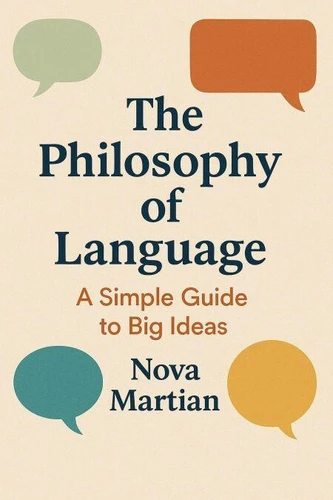
The Philosophy of Language: A Simple Guide to Big Ideas
Par :Formats :
Actuellement indisponible
Cet article est actuellement indisponible, il ne peut pas être commandé sur notre site pour le moment. Nous vous invitons à vous inscrire à l'alerte disponibilité, vous recevrez un e-mail dès que cet ouvrage sera à nouveau disponible.
Disponible dans votre compte client Decitre ou Furet du Nord dès validation de votre commande. Le format ePub protégé est :
- Compatible avec une lecture sur My Vivlio (smartphone, tablette, ordinateur)
- Compatible avec une lecture sur liseuses Vivlio
- Pour les liseuses autres que Vivlio, vous devez utiliser le logiciel Adobe Digital Edition. Non compatible avec la lecture sur les liseuses Kindle, Remarkable et Sony
- Non compatible avec un achat hors France métropolitaine
 , qui est-ce ?
Notre partenaire de plateforme de lecture numérique où vous retrouverez l'ensemble de vos ebooks gratuitement
Pour en savoir plus sur nos ebooks, consultez notre aide en ligne ici
C'est si simple ! Lisez votre ebook avec l'app Vivlio sur votre tablette, mobile ou ordinateur :

- FormatePub
- ISBN8231113507
- EAN9798231113507
- Date de parution25/04/2025
- Protection num.Adobe DRM
- Infos supplémentairesepub
- ÉditeurWalzone Press
Résumé
"The Philosophy of Language: A Simple Guide to Big Ideas" is an accessible yet comprehensive introduction to one of philosophy's most intriguing domains. The book gracefully guides readers through the foundations of language, clarifying essential questions about meaning, reference, and truth, and shedding light on the profound connections between language, thought, and reality. With a clear structure and inviting style, it connects ancient theories from Plato and Aristotle through the innovations of Saussure, Wittgenstein, and Chomsky, tracing the historical evolution of our understanding of how language shapes and is shaped by human minds and societies.
Moving beyond theory, the book demystifies complex topics such as the distinction between semantics and pragmatics, the power of metaphor and narrative, and the intricate dance of language and logic. Readers are introduced to central debates around the nature of meaning, how language operates in context, and the philosophical puzzles posed by vagueness and paradox. Psychological and cultural dimensions are explored through discussions on language acquisition, the Sapir-Whorf hypothesis, and the interface between language, consciousness, and creativity, as well as the essential roles language plays in shaping identity, society, and power.
Contemporary challenges are not forgotten. The final chapters investigate the impact of artificial intelligence, the urgency of preserving endangered languages, and the complexities of cross-cultural communication in a digital age. By weaving together classic and cutting-edge perspectives, this guide offers both newcomers and seasoned students a rich, engaging roadmap for understanding the profound role language plays in shaping human experience and thought.
Moving beyond theory, the book demystifies complex topics such as the distinction between semantics and pragmatics, the power of metaphor and narrative, and the intricate dance of language and logic. Readers are introduced to central debates around the nature of meaning, how language operates in context, and the philosophical puzzles posed by vagueness and paradox. Psychological and cultural dimensions are explored through discussions on language acquisition, the Sapir-Whorf hypothesis, and the interface between language, consciousness, and creativity, as well as the essential roles language plays in shaping identity, society, and power.
Contemporary challenges are not forgotten. The final chapters investigate the impact of artificial intelligence, the urgency of preserving endangered languages, and the complexities of cross-cultural communication in a digital age. By weaving together classic and cutting-edge perspectives, this guide offers both newcomers and seasoned students a rich, engaging roadmap for understanding the profound role language plays in shaping human experience and thought.
"The Philosophy of Language: A Simple Guide to Big Ideas" is an accessible yet comprehensive introduction to one of philosophy's most intriguing domains. The book gracefully guides readers through the foundations of language, clarifying essential questions about meaning, reference, and truth, and shedding light on the profound connections between language, thought, and reality. With a clear structure and inviting style, it connects ancient theories from Plato and Aristotle through the innovations of Saussure, Wittgenstein, and Chomsky, tracing the historical evolution of our understanding of how language shapes and is shaped by human minds and societies.
Moving beyond theory, the book demystifies complex topics such as the distinction between semantics and pragmatics, the power of metaphor and narrative, and the intricate dance of language and logic. Readers are introduced to central debates around the nature of meaning, how language operates in context, and the philosophical puzzles posed by vagueness and paradox. Psychological and cultural dimensions are explored through discussions on language acquisition, the Sapir-Whorf hypothesis, and the interface between language, consciousness, and creativity, as well as the essential roles language plays in shaping identity, society, and power.
Contemporary challenges are not forgotten. The final chapters investigate the impact of artificial intelligence, the urgency of preserving endangered languages, and the complexities of cross-cultural communication in a digital age. By weaving together classic and cutting-edge perspectives, this guide offers both newcomers and seasoned students a rich, engaging roadmap for understanding the profound role language plays in shaping human experience and thought.
Moving beyond theory, the book demystifies complex topics such as the distinction between semantics and pragmatics, the power of metaphor and narrative, and the intricate dance of language and logic. Readers are introduced to central debates around the nature of meaning, how language operates in context, and the philosophical puzzles posed by vagueness and paradox. Psychological and cultural dimensions are explored through discussions on language acquisition, the Sapir-Whorf hypothesis, and the interface between language, consciousness, and creativity, as well as the essential roles language plays in shaping identity, society, and power.
Contemporary challenges are not forgotten. The final chapters investigate the impact of artificial intelligence, the urgency of preserving endangered languages, and the complexities of cross-cultural communication in a digital age. By weaving together classic and cutting-edge perspectives, this guide offers both newcomers and seasoned students a rich, engaging roadmap for understanding the profound role language plays in shaping human experience and thought.