SOLDES
Jusqu'à -70% sur une sélection d'articles*

Nouveauté
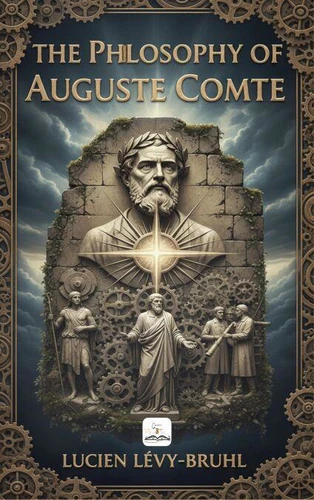
The Philosophy of Auguste Comte
Par :Formats :
Disponible dans votre compte client Decitre ou Furet du Nord dès validation de votre commande. Le format ePub est :
- Compatible avec une lecture sur My Vivlio (smartphone, tablette, ordinateur)
- Compatible avec une lecture sur liseuses Vivlio
- Pour les liseuses autres que Vivlio, vous devez utiliser le logiciel Adobe Digital Edition. Non compatible avec la lecture sur les liseuses Kindle, Remarkable et Sony
 , qui est-ce ?
Notre partenaire de plateforme de lecture numérique où vous retrouverez l'ensemble de vos ebooks gratuitement
Pour en savoir plus sur nos ebooks, consultez notre aide en ligne ici
C'est si simple ! Lisez votre ebook avec l'app Vivlio sur votre tablette, mobile ou ordinateur :

- Nombre de pages407
- FormatePub
- ISBN978-625-387-817-7
- EAN9786253878177
- Date de parution22/05/2026
- Protection num.Digital Watermarking
- Taille4 Mo
- Infos supplémentairesepub
- ÉditeurE-Kitap Projesi & Cheapest Boo
Résumé
M. Lévy-Bruhl then explains that, whilst recognising the entire coherence of Comte's collective labours, he proposes to confine his present study to the earlier and principal work, the Philosophy, which in M. Lévy-Bruhl's opinion is the dominant and more fruitful composition.
This he regards as the representative work of the nineteenth century, as shown by the intellectual history of the period.
He points to its influence on thought in England, in Europe, and in America. It will surprise many persons to learn that in M. Lévy-Bruhl's opinion two eminent French writers, who assuredly neither were, nor were supposed to be, Positivists, "have done more for the diffusion of the ideas and method of Comte than Littré and all the other Positivists together." These two are Taine and Renan, much as they differed from Comte's actual scheme and doctrines.
Renan indeed spoke of Comte as destined to prove one of the typical names of the century. The present writer remembers Renan saying to him with a most genial welcome, "I too am a believer in the religion of humanity."
He points to its influence on thought in England, in Europe, and in America. It will surprise many persons to learn that in M. Lévy-Bruhl's opinion two eminent French writers, who assuredly neither were, nor were supposed to be, Positivists, "have done more for the diffusion of the ideas and method of Comte than Littré and all the other Positivists together." These two are Taine and Renan, much as they differed from Comte's actual scheme and doctrines.
Renan indeed spoke of Comte as destined to prove one of the typical names of the century. The present writer remembers Renan saying to him with a most genial welcome, "I too am a believer in the religion of humanity."