SOLDES
Jusqu'à -70% sur une sélection d'articles*
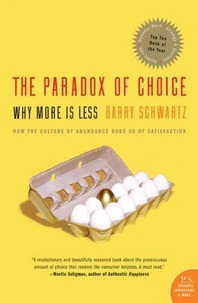
The Paradox of Choice Updated Edition. Why More Is Less
Par :Formats :
Disponible dans votre compte client Decitre ou Furet du Nord dès validation de votre commande. Le format ePub protégé est :
- Compatible avec une lecture sur My Vivlio (smartphone, tablette, ordinateur)
- Compatible avec une lecture sur liseuses Vivlio
- Pour les liseuses autres que Vivlio, vous devez utiliser le logiciel Adobe Digital Edition. Non compatible avec la lecture sur les liseuses Kindle, Remarkable et Sony
- Non compatible avec un achat hors France métropolitaine
 , qui est-ce ?
Notre partenaire de plateforme de lecture numérique où vous retrouverez l'ensemble de vos ebooks gratuitement
Pour en savoir plus sur nos ebooks, consultez notre aide en ligne ici
C'est si simple ! Lisez votre ebook avec l'app Vivlio sur votre tablette, mobile ou ordinateur :

- Date de parution03/11/2026
- FormatePub
- ISBN978-0-06-344106-4
- EAN9780063441064
- Protection num.Adobe DRM
- Infos supplémentairesepub
- ÉditeurEcco
Résumé
Whether we're buying a pair of jeans, ordering a cup of coffee, purchasing shampoo from the drug store, selecting a long-distance carrier, applying to college, choosing a doctor, or setting up a 401(k), everyday decisions--both big and small-have become increasingly complex due to the overwhelming abundance of choice with which we are presented.
Your students may assume that more choice means better options and greater satisfaction.
However, they need to be aware of excessive choice: choice overload can make you question the decisions you make before you even make them, setting you up for unrealistically high expectations and making you blame yourself for any failures. In the long run, this can lead to decision-making paralysis, anxiety, and perpetual stress. And, in a culture that tells us that there is no excuse for falling short of perfection when your options are limitless, too much choice can lead to clinical depression. In The Paradox of Choice, Barry Schwartz explains at what point choice becomes detrimental to our psychological and emotional well-being.
By synthesizing current research in the social sciences, Schwartz makes the counterintuitive case that eliminating choices can greatly reduce the stress and anxiety of our lives. He offers eleven practical steps on how to limit choices to a manageable number, have the discipline to focus on those that are important and ignore the rest, and ultimately derive greater satisfaction from the choices you have to make.
However, they need to be aware of excessive choice: choice overload can make you question the decisions you make before you even make them, setting you up for unrealistically high expectations and making you blame yourself for any failures. In the long run, this can lead to decision-making paralysis, anxiety, and perpetual stress. And, in a culture that tells us that there is no excuse for falling short of perfection when your options are limitless, too much choice can lead to clinical depression. In The Paradox of Choice, Barry Schwartz explains at what point choice becomes detrimental to our psychological and emotional well-being.
By synthesizing current research in the social sciences, Schwartz makes the counterintuitive case that eliminating choices can greatly reduce the stress and anxiety of our lives. He offers eleven practical steps on how to limit choices to a manageable number, have the discipline to focus on those that are important and ignore the rest, and ultimately derive greater satisfaction from the choices you have to make.