SOLDES
Jusqu'à -70% sur une sélection d'articles*

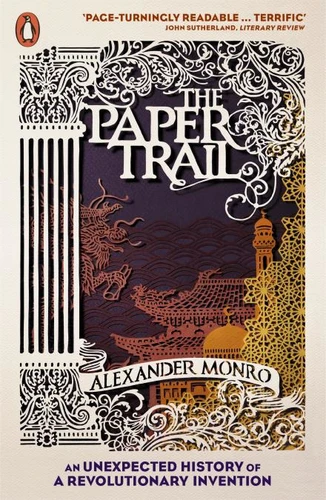
The Paper Trail. An Unexpected History of a Revolutionary Invention
Par :Formats :
Disponible dans votre compte client Decitre ou Furet du Nord dès validation de votre commande. Le format ePub protégé est :
- Compatible avec une lecture sur My Vivlio (smartphone, tablette, ordinateur)
- Compatible avec une lecture sur liseuses Vivlio
- Pour les liseuses autres que Vivlio, vous devez utiliser le logiciel Adobe Digital Edition. Non compatible avec la lecture sur les liseuses Kindle, Remarkable et Sony
- Non compatible avec un achat hors France métropolitaine
 , qui est-ce ?
Notre partenaire de plateforme de lecture numérique où vous retrouverez l'ensemble de vos ebooks gratuitement
Pour en savoir plus sur nos ebooks, consultez notre aide en ligne ici
C'est si simple ! Lisez votre ebook avec l'app Vivlio sur votre tablette, mobile ou ordinateur :

- Nombre de pages288
- FormatePub
- ISBN978-1-84614-720-3
- EAN9781846147203
- Date de parution01/05/2014
- Protection num.Adobe DRM
- Infos supplémentairesepub
- ÉditeurPenguin
Résumé
This is the story of how paper, a simple Chinese invention, has wrapped itself around our world, with history's most momentous ideas etched upon its surface. The emergence of paper in the imperial court of Han China brought about a revolution in the transmission of knowledge and of ideas. For over two millennia, it has allowed ideas, religions, philosophies and propaganda to spread around the world with ever greater ease.
Paper was the first writing surface sufficiently cheap, portable and printable for books, pamphlets, prints and journals to be mass-produced and to travel widely. It enabled an ongoing dialogue between communities of scholars who could now engage with each others' ideas across continents and years. The Paper Trail traces the westward voyage of this ground-breaking invention; beginning with the Buddhist translators responsible for the spread of paper across China, Japan, Korea and Vietnam.
It describes the theologians, scientists and artists who used paper to create the intellectual world of the Abbasid Caliphate, and journeys with the missionaries and merchants who carried it along the Silk Road. Paper finally reached Europe in 1276 and was indispensable to the scholars and translators who manufactured the Renaissance and Reformation from their desks. Paper created a world in which free thinking could flourish, and brought disciplines from science to music into a new age: the paper age.
Paper still surrounds us in our everyday lives - on our desks, wrapping our food, in our wallets. It has become universal, and also supremely disposable. But is the age of paper coming to an end?
Paper was the first writing surface sufficiently cheap, portable and printable for books, pamphlets, prints and journals to be mass-produced and to travel widely. It enabled an ongoing dialogue between communities of scholars who could now engage with each others' ideas across continents and years. The Paper Trail traces the westward voyage of this ground-breaking invention; beginning with the Buddhist translators responsible for the spread of paper across China, Japan, Korea and Vietnam.
It describes the theologians, scientists and artists who used paper to create the intellectual world of the Abbasid Caliphate, and journeys with the missionaries and merchants who carried it along the Silk Road. Paper finally reached Europe in 1276 and was indispensable to the scholars and translators who manufactured the Renaissance and Reformation from their desks. Paper created a world in which free thinking could flourish, and brought disciplines from science to music into a new age: the paper age.
Paper still surrounds us in our everyday lives - on our desks, wrapping our food, in our wallets. It has become universal, and also supremely disposable. But is the age of paper coming to an end?