
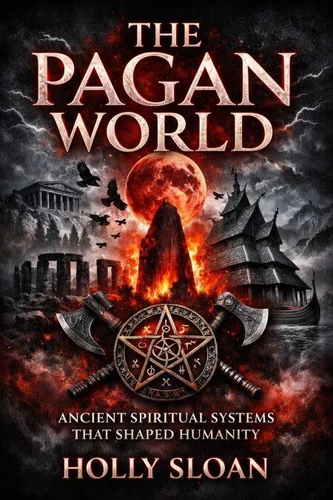
The Pagan World
Par :Formats :
Disponible dans votre compte client Decitre ou Furet du Nord dès validation de votre commande. Le format ePub est :
- Compatible avec une lecture sur My Vivlio (smartphone, tablette, ordinateur)
- Compatible avec une lecture sur liseuses Vivlio
- Pour les liseuses autres que Vivlio, vous devez utiliser le logiciel Adobe Digital Edition. Non compatible avec la lecture sur les liseuses Kindle, Remarkable et Sony
 , qui est-ce ?
Notre partenaire de plateforme de lecture numérique où vous retrouverez l'ensemble de vos ebooks gratuitement
Pour en savoir plus sur nos ebooks, consultez notre aide en ligne ici
C'est si simple ! Lisez votre ebook avec l'app Vivlio sur votre tablette, mobile ou ordinateur :

- FormatePub
- ISBN8233252426
- EAN9798233252426
- Date de parution30/01/2026
- Protection num.pas de protection
- Infos supplémentairesepub
- ÉditeurLinda Balsamo
Résumé
THE PAGAN WORLDAncient Spiritual Systems That Shaped HumanityBy Holly SloanBefore organized religion, before doctrine and dogma, humanity understood the world through pagan spiritual systems rooted in land, ancestors, cycles, and unseen forces. These ancient belief structures shaped how societies governed themselves, marked time, understood fate, honored the dead, and explained humanity's place within nature.
The Pagan World explores the global pagan traditions that formed the foundation of human spirituality across Europe and beyond. From the British Isles to the Mediterranean, from the forests of Northern Europe to the sacred landscapes of the Baltic and Slavic worlds, this book traces how diverse cultures developed distinct spiritual identities while sharing remarkably similar structures of belief. The book examines European pagan traditions in depth, including Greek, Roman, Celtic, Germanic, Slavic, Baltic, Finnic, and Arctic worldviews, revealing how geography, climate, and survival shaped religious practice.
It explores civic religion, household worship, ancestor veneration, sacred groves, seasonal festivals, and the role of gods as active forces rather than moral authorities. Beyond Europe, the book places these traditions within a wider global context, comparing them with Indigenous and ancestral spiritual systems across the world. It reveals the shared foundations of pagan belief: reverence for land, cyclical time, spirits of place, ritual action, and communal responsibility.
Rather than presenting paganism as a single religion, The Pagan World shows it as humanity's original spiritual language, a way of understanding reality that existed long before sacred texts or centralized authority. It explains how these systems functioned in everyday life, how they governed law and custom, and how they endured despite centuries of suppression. The book also examines how pagan traditions survived beneath later religions, preserved in folklore, seasonal festivals, household customs, sacred sites, and cultural memory.
Churches built on ancient shrines, saints inheriting the roles of old gods, and festivals carrying older meanings reveal a world not erased, but transformed. The Pagan World is a comprehensive exploration of humanity's earliest spiritual inheritance, offering readers a clear understanding of how ancient pagan systems shaped civilization itself and continue to influence modern culture, belief, and identity.
This book is ideal for readers interested in paganism, mythology, folklore, anthropology, ancient history, and the spiritual foundations of human society.
The Pagan World explores the global pagan traditions that formed the foundation of human spirituality across Europe and beyond. From the British Isles to the Mediterranean, from the forests of Northern Europe to the sacred landscapes of the Baltic and Slavic worlds, this book traces how diverse cultures developed distinct spiritual identities while sharing remarkably similar structures of belief. The book examines European pagan traditions in depth, including Greek, Roman, Celtic, Germanic, Slavic, Baltic, Finnic, and Arctic worldviews, revealing how geography, climate, and survival shaped religious practice.
It explores civic religion, household worship, ancestor veneration, sacred groves, seasonal festivals, and the role of gods as active forces rather than moral authorities. Beyond Europe, the book places these traditions within a wider global context, comparing them with Indigenous and ancestral spiritual systems across the world. It reveals the shared foundations of pagan belief: reverence for land, cyclical time, spirits of place, ritual action, and communal responsibility.
Rather than presenting paganism as a single religion, The Pagan World shows it as humanity's original spiritual language, a way of understanding reality that existed long before sacred texts or centralized authority. It explains how these systems functioned in everyday life, how they governed law and custom, and how they endured despite centuries of suppression. The book also examines how pagan traditions survived beneath later religions, preserved in folklore, seasonal festivals, household customs, sacred sites, and cultural memory.
Churches built on ancient shrines, saints inheriting the roles of old gods, and festivals carrying older meanings reveal a world not erased, but transformed. The Pagan World is a comprehensive exploration of humanity's earliest spiritual inheritance, offering readers a clear understanding of how ancient pagan systems shaped civilization itself and continue to influence modern culture, belief, and identity.
This book is ideal for readers interested in paganism, mythology, folklore, anthropology, ancient history, and the spiritual foundations of human society.