SOLDES
Jusqu'à -70% sur une sélection d'articles*

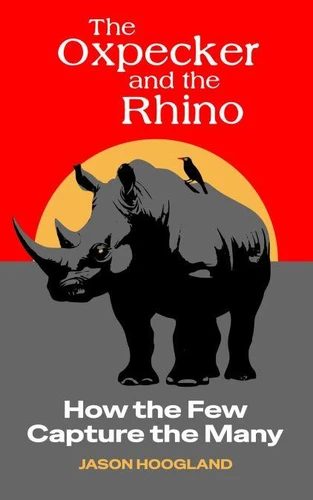
The Oxpecker and the Rhino. The Few and the Many, #1
Par :Formats :
Disponible dans votre compte client Decitre ou Furet du Nord dès validation de votre commande. Le format ePub est :
- Compatible avec une lecture sur My Vivlio (smartphone, tablette, ordinateur)
- Compatible avec une lecture sur liseuses Vivlio
- Pour les liseuses autres que Vivlio, vous devez utiliser le logiciel Adobe Digital Edition. Non compatible avec la lecture sur les liseuses Kindle, Remarkable et Sony
 , qui est-ce ?
Notre partenaire de plateforme de lecture numérique où vous retrouverez l'ensemble de vos ebooks gratuitement
Pour en savoir plus sur nos ebooks, consultez notre aide en ligne ici
C'est si simple ! Lisez votre ebook avec l'app Vivlio sur votre tablette, mobile ou ordinateur :

- FormatePub
- ISBN978-1-7645912-2-5
- EAN9781764591225
- Date de parution08/04/2026
- Protection num.pas de protection
- Infos supplémentairesepub
- ÉditeurJason Hoogland
Résumé
The streaming service that just raised prices again. The planning approval that costs more than the renovation. The hospital owned by investors who've never met a patient. You sense something is wrong but lack the vocabulary for it. This book provides the vocabulary. Organised minorities consistently defeat disorganised majorities. When ten people can split ten million pounds, each has a million pounds' worth of reason to coordinate.
When ten million people share the cost, each has one pound's worth of reason to resist. The arithmetic is simple. The consequences shape everything from Roman tax farming to modern private equity, from medieval serfdom to digital surveillance. The Oxpecker and the Rhino introduces the Appropriation Cube, a framework for diagnosing how value is extracted through three structural dimensions: legitimation (how arrangements become accepted), persistence (how long they last), and enclosure (how hard they are to escape).
The framework reveals why extraction drifts toward its most stable form, and why the forces that could reverse it keep getting disabled. Part I establishes the pattern through contemporary wage stagnation and ancient debt traps. Part II examines the machinery that sustains modern extraction, from pension funds financing the competition that destroys their members' livelihoods, to surveillance systems that erode the capacity to notice what is being taken.
Part III shifts from diagnosis to action, presenting working alternatives from Vienna's social housing to Ireland's citizens' assemblies, and offering readers a practical guide to entering the rooms where rules are written. The book weaves fictional dramatisations, historical reconstruction, and living case studies into a single argument. A Godfather-style dialogue makes the cube concrete. A fictional podcast reconstructs what Roman tax farming did to provincial villages.
A Yes Minister scene skewers bureaucratic resistance to democratic reform. The rhinoceros is waking up. This book shows it what has been sitting on its back.
When ten million people share the cost, each has one pound's worth of reason to resist. The arithmetic is simple. The consequences shape everything from Roman tax farming to modern private equity, from medieval serfdom to digital surveillance. The Oxpecker and the Rhino introduces the Appropriation Cube, a framework for diagnosing how value is extracted through three structural dimensions: legitimation (how arrangements become accepted), persistence (how long they last), and enclosure (how hard they are to escape).
The framework reveals why extraction drifts toward its most stable form, and why the forces that could reverse it keep getting disabled. Part I establishes the pattern through contemporary wage stagnation and ancient debt traps. Part II examines the machinery that sustains modern extraction, from pension funds financing the competition that destroys their members' livelihoods, to surveillance systems that erode the capacity to notice what is being taken.
Part III shifts from diagnosis to action, presenting working alternatives from Vienna's social housing to Ireland's citizens' assemblies, and offering readers a practical guide to entering the rooms where rules are written. The book weaves fictional dramatisations, historical reconstruction, and living case studies into a single argument. A Godfather-style dialogue makes the cube concrete. A fictional podcast reconstructs what Roman tax farming did to provincial villages.
A Yes Minister scene skewers bureaucratic resistance to democratic reform. The rhinoceros is waking up. This book shows it what has been sitting on its back.