SOLDES
Jusqu'à -70% sur une sélection d'articles*

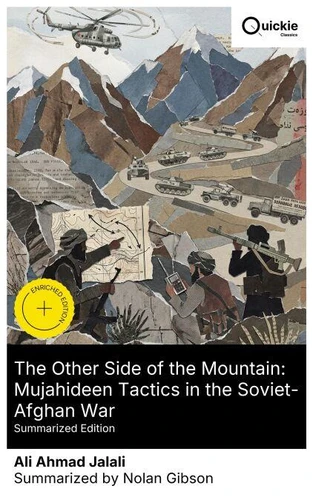
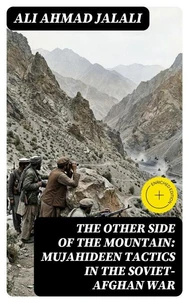
The Other Side of the Mountain: Mujahideen Tactics in the Soviet-Afghan War (Summarized Edition). Enriched edition. Mujahideen Perspectives on Asymmetric Warfare in the 1980s Soviet-Afghan Conflict
Par : ,Formats :
Disponible dans votre compte client Decitre ou Furet du Nord dès validation de votre commande. Le format ePub est :
- Compatible avec une lecture sur My Vivlio (smartphone, tablette, ordinateur)
- Compatible avec une lecture sur liseuses Vivlio
- Pour les liseuses autres que Vivlio, vous devez utiliser le logiciel Adobe Digital Edition. Non compatible avec la lecture sur les liseuses Kindle, Remarkable et Sony
 , qui est-ce ?
Notre partenaire de plateforme de lecture numérique où vous retrouverez l'ensemble de vos ebooks gratuitement
Pour en savoir plus sur nos ebooks, consultez notre aide en ligne ici
C'est si simple ! Lisez votre ebook avec l'app Vivlio sur votre tablette, mobile ou ordinateur :

- Nombre de pages123
- FormatePub
- ISBN859-65--4787897-1
- EAN8596547878971
- Date de parution10/01/2026
- Protection num.Digital Watermarking
- Taille1023 Ko
- Infos supplémentairesepub
- ÉditeurQUICKIE CLASSICS
Résumé
The Other Side of the Mountain offers a granular compendium of Mujahideen tactical vignettes from the Soviet-Afghan War. Organized by mode of combat-ambushes, raids, sieges, mining, interdiction, and defense-the cases pair clear maps and order-of-battle notes with concise narratives and after-action reflections. The prose is spare, field-focused, and analytic, situating each fight in its terrain, tribal, and logistical setting.
As a deliberate counterpoint to Soviet-framed studies, it reconstructs guerrilla decision-making, highlighting decentralized command, improvisation, and the operational effects of mobility, sanctuary, and anti-air tactics. Ali Ahmad Jalali brings the vantage of an Afghan military professional and scholar who straddled soldiering, analysis, and governance. His service in Afghanistan's armed forces, long experience as a journalist and analyst, linguistic reach, and stewardship of the Interior Ministry afforded rare access to commanders, fighters, and archives.
That access grounds the book's rigorously sourced vignettes and judgments, transforming oral recollections into teachable, context-rich doctrine for irregular warfare. This volume is indispensable for officers, historians, and policy practitioners seeking to understand how small units prevail in harsh, politically complex environments. Read it to test doctrine against lived combat, see tactics nested in culture and terrain, and draw durable lessons without romanticizing insurgency. Quickie Classics summarizes timeless works with precision, preserving the author's voice and keeping the prose clear, fast, and readable-distilled, never diluted.
Enriched Edition extras: Introduction · Synopsis · Historical Context · Brief Analysis · 4 Reflection Q&As · Editorial Footnotes.
As a deliberate counterpoint to Soviet-framed studies, it reconstructs guerrilla decision-making, highlighting decentralized command, improvisation, and the operational effects of mobility, sanctuary, and anti-air tactics. Ali Ahmad Jalali brings the vantage of an Afghan military professional and scholar who straddled soldiering, analysis, and governance. His service in Afghanistan's armed forces, long experience as a journalist and analyst, linguistic reach, and stewardship of the Interior Ministry afforded rare access to commanders, fighters, and archives.
That access grounds the book's rigorously sourced vignettes and judgments, transforming oral recollections into teachable, context-rich doctrine for irregular warfare. This volume is indispensable for officers, historians, and policy practitioners seeking to understand how small units prevail in harsh, politically complex environments. Read it to test doctrine against lived combat, see tactics nested in culture and terrain, and draw durable lessons without romanticizing insurgency. Quickie Classics summarizes timeless works with precision, preserving the author's voice and keeping the prose clear, fast, and readable-distilled, never diluted.
Enriched Edition extras: Introduction · Synopsis · Historical Context · Brief Analysis · 4 Reflection Q&As · Editorial Footnotes.