
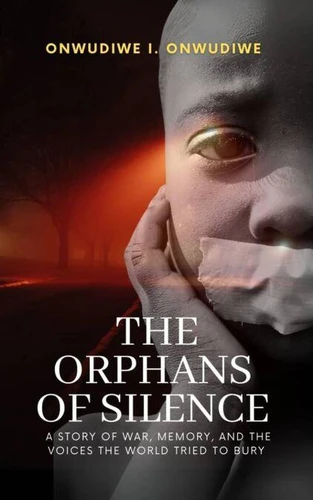
The Orphans of Silence. The Historical War Fiction Series, #1
Par :Formats :
Disponible dans votre compte client Decitre ou Furet du Nord dès validation de votre commande. Le format ePub est :
- Compatible avec une lecture sur My Vivlio (smartphone, tablette, ordinateur)
- Compatible avec une lecture sur liseuses Vivlio
- Pour les liseuses autres que Vivlio, vous devez utiliser le logiciel Adobe Digital Edition. Non compatible avec la lecture sur les liseuses Kindle, Remarkable et Sony
 , qui est-ce ?
Notre partenaire de plateforme de lecture numérique où vous retrouverez l'ensemble de vos ebooks gratuitement
Pour en savoir plus sur nos ebooks, consultez notre aide en ligne ici
C'est si simple ! Lisez votre ebook avec l'app Vivlio sur votre tablette, mobile ou ordinateur :

- FormatePub
- ISBN978-1-919311-61-6
- EAN9781919311616
- Date de parution26/10/2025
- Protection num.pas de protection
- Infos supplémentairesepub
- ÉditeurArksilver Press
Résumé
The Orphans of SilenceA Literary Historical Novel of War, Memory, and Redemption in Postcolonial AfricaA generation after the war, the land still wakes in silence. It is a heavy, uncanny quiet - the hush of dawn after a long nightmare, when even the birds hesitate to sing. Beneath that silence lies the aftertaste of conflict: villages rebuilt upon ruins, graves disguised as gardens, and a people who have learned to bury their words along with their dead.
They say the dead are silent, but here it is the living who have forgotten how to speak. In this haunting and deeply human novel, The Orphans of Silence tells the story of those who survived the Biafran War yet could not escape its echoes. Through the eyes of a child born shortly before the fighting began, the reader journeys into a world where memory itself has become forbidden, and silence is both a shield and a curse.
The narrator inherits not peace, but a legacy of unspoken grief - a generation forced to smile through hunger, rebuild on bones, and pretend that forgetting was forgiveness. The story begins in a village still haunted by unburied ghosts. Every household carries its secrets, every face a scar. Mothers whisper prayers to Ala, the Earth goddess, begging forgiveness for the blood that soaked her soil.
Fathers wake screaming in the night. Children return to schools with empty desks, learning quickly never to ask why their teachers limp or why their neighbours no longer speak. Even the gods, once loud in their oracles, now seem weary. Amid this suffocating quiet, a young voice begins to question the silence. Why are the elders afraid to speak of the war? Why do the rivers, once red with blood, still murmur like mourners in the night? What truths were buried beneath the marketplaces and churches when the guns went still? From these questions begins a journey of remembrance - a quest not for vengeance, but for understanding.
Drawing upon the myths and cosmology of the Igbo people, the novel weaves memory and mysticism into one seamless narrative. The River Woman sings to the dead. Ancestors cross the thin veil between worlds. The boundary between history and the spirit realm blurs as the protagonist learns that silence itself is a living thing - an inheritance carried in blood. The Orphans of Silence is both an elegy and an awakening.
It captures the lingering trauma of war and the quiet courage of those who rebuild when the world looks away. It is a story of loss, truth, and the fragile art of healing - a meditation on how nations remember, and how forgetting becomes another kind of death. Written in luminous prose that recalls the lyric beauty of Ben Okri and the emotional precision of Chimamanda Ngozi Adichie, Onwudiwe I. Onwudiwe brings to life a story at once intimate and universal.
His voice speaks to every person who has ever endured unspeakable pain and been told to move on. If you are drawn to novels such as Half of a Yellow Sun, Things Fall Apart, or The Kite Runner, this book will stay with you long after the final page. It reminds us that silence is not peace, that truth buried alive will one day rise, and that remembrance is itself an act of redemption. The Orphans of Silence is not merely a story of war.
It is a testament to survival, a requiem for forgotten voices, and a call for healing - one whispered truth at a time.
They say the dead are silent, but here it is the living who have forgotten how to speak. In this haunting and deeply human novel, The Orphans of Silence tells the story of those who survived the Biafran War yet could not escape its echoes. Through the eyes of a child born shortly before the fighting began, the reader journeys into a world where memory itself has become forbidden, and silence is both a shield and a curse.
The narrator inherits not peace, but a legacy of unspoken grief - a generation forced to smile through hunger, rebuild on bones, and pretend that forgetting was forgiveness. The story begins in a village still haunted by unburied ghosts. Every household carries its secrets, every face a scar. Mothers whisper prayers to Ala, the Earth goddess, begging forgiveness for the blood that soaked her soil.
Fathers wake screaming in the night. Children return to schools with empty desks, learning quickly never to ask why their teachers limp or why their neighbours no longer speak. Even the gods, once loud in their oracles, now seem weary. Amid this suffocating quiet, a young voice begins to question the silence. Why are the elders afraid to speak of the war? Why do the rivers, once red with blood, still murmur like mourners in the night? What truths were buried beneath the marketplaces and churches when the guns went still? From these questions begins a journey of remembrance - a quest not for vengeance, but for understanding.
Drawing upon the myths and cosmology of the Igbo people, the novel weaves memory and mysticism into one seamless narrative. The River Woman sings to the dead. Ancestors cross the thin veil between worlds. The boundary between history and the spirit realm blurs as the protagonist learns that silence itself is a living thing - an inheritance carried in blood. The Orphans of Silence is both an elegy and an awakening.
It captures the lingering trauma of war and the quiet courage of those who rebuild when the world looks away. It is a story of loss, truth, and the fragile art of healing - a meditation on how nations remember, and how forgetting becomes another kind of death. Written in luminous prose that recalls the lyric beauty of Ben Okri and the emotional precision of Chimamanda Ngozi Adichie, Onwudiwe I. Onwudiwe brings to life a story at once intimate and universal.
His voice speaks to every person who has ever endured unspeakable pain and been told to move on. If you are drawn to novels such as Half of a Yellow Sun, Things Fall Apart, or The Kite Runner, this book will stay with you long after the final page. It reminds us that silence is not peace, that truth buried alive will one day rise, and that remembrance is itself an act of redemption. The Orphans of Silence is not merely a story of war.
It is a testament to survival, a requiem for forgotten voices, and a call for healing - one whispered truth at a time.