SOLDES
Jusqu'à -70% sur une sélection d'articles*

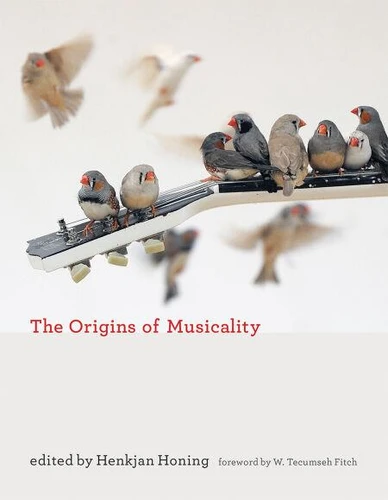
The Origins of Musicality
Par :Formats :
Disponible dans votre compte client Decitre ou Furet du Nord dès validation de votre commande. Le format ePub protégé est :
- Compatible avec une lecture sur My Vivlio (smartphone, tablette, ordinateur)
- Compatible avec une lecture sur liseuses Vivlio
- Pour les liseuses autres que Vivlio, vous devez utiliser le logiciel Adobe Digital Edition. Non compatible avec la lecture sur les liseuses Kindle, Remarkable et Sony
- Non compatible avec un achat hors France métropolitaine
 , qui est-ce ?
Notre partenaire de plateforme de lecture numérique où vous retrouverez l'ensemble de vos ebooks gratuitement
Pour en savoir plus sur nos ebooks, consultez notre aide en ligne ici
C'est si simple ! Lisez votre ebook avec l'app Vivlio sur votre tablette, mobile ou ordinateur :

- Nombre de pages364
- FormatePub
- ISBN978-0-262-34455-5
- EAN9780262344555
- Date de parution20/04/2018
- Protection num.Adobe DRM
- Taille3 Mo
- Infos supplémentairesepub
- ÉditeurThe MIT Press
Résumé
Interdisciplinary perspectives on the capacity to perceive, appreciate, and make music. Research shows that all humans have a predisposition for music, just as they do for language. All of us can perceive and enjoy music, even if we can't carry a tune and consider ourselves "unmusical." This volume offers interdisciplinary perspectives on the capacity to perceive, appreciate, and make music. Scholars from biology, musicology, neurology, genetics, computer science, anthropology, psychology, and other fields consider what music is for and why every human culture has it; whether musicality is a uniquely human capacity; and what biological and cognitive mechanisms underlie it.
Contributors outline a research program in musicality, and discuss issues in studying the evolution of music; consider principles, constraints, and theories of origins; review musicality from cross-cultural, cross-species, and cross-domain perspectives; discuss the computational modeling of animal song and creativity; and offer a historical context for the study of musicality. The volume aims to identify the basic neurocognitive mechanisms that constitute musicality (and effective ways to study these in human and nonhuman animals) and to develop a method for analyzing musical phenotypes that point to the biological basis of musicality.
ContributorsJorge L. Armony, Judith Becker, Simon E. Fisher, W. Tecumseh Fitch, Bruno Gingras, Jessica Grahn, Yuko Hattori, Marisa Hoeschele, Henkjan Honing, David Huron, Dieuwke Hupkes, Yukiko Kikuchi, Julia Kursell, Marie-Élaine Lagrois, Hugo Merchant, Björn Merker, Iain Morley, Aniruddh D. Patel, Isabelle Peretz, Martin Rohrmeier, Constance Scharff, Carel ten Cate, Laurel J. Trainor, Sandra E. Trehub, Peter Tyack, Dominique Vuvan, Geraint Wiggins, Willem Zuidema
Contributors outline a research program in musicality, and discuss issues in studying the evolution of music; consider principles, constraints, and theories of origins; review musicality from cross-cultural, cross-species, and cross-domain perspectives; discuss the computational modeling of animal song and creativity; and offer a historical context for the study of musicality. The volume aims to identify the basic neurocognitive mechanisms that constitute musicality (and effective ways to study these in human and nonhuman animals) and to develop a method for analyzing musical phenotypes that point to the biological basis of musicality.
ContributorsJorge L. Armony, Judith Becker, Simon E. Fisher, W. Tecumseh Fitch, Bruno Gingras, Jessica Grahn, Yuko Hattori, Marisa Hoeschele, Henkjan Honing, David Huron, Dieuwke Hupkes, Yukiko Kikuchi, Julia Kursell, Marie-Élaine Lagrois, Hugo Merchant, Björn Merker, Iain Morley, Aniruddh D. Patel, Isabelle Peretz, Martin Rohrmeier, Constance Scharff, Carel ten Cate, Laurel J. Trainor, Sandra E. Trehub, Peter Tyack, Dominique Vuvan, Geraint Wiggins, Willem Zuidema