
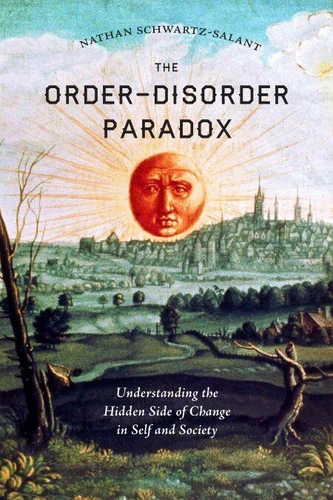
The Order-Disorder Paradox. Understanding the Hidden Side of Change in Self and Society
Par :Formats :
Disponible dans votre compte client Decitre ou Furet du Nord dès validation de votre commande. Le format ePub protégé est :
- Compatible avec une lecture sur My Vivlio (smartphone, tablette, ordinateur)
- Compatible avec une lecture sur liseuses Vivlio
- Pour les liseuses autres que Vivlio, vous devez utiliser le logiciel Adobe Digital Edition. Non compatible avec la lecture sur les liseuses Kindle, Remarkable et Sony
- Non compatible avec un achat hors France métropolitaine
 , qui est-ce ?
Notre partenaire de plateforme de lecture numérique où vous retrouverez l'ensemble de vos ebooks gratuitement
Pour en savoir plus sur nos ebooks, consultez notre aide en ligne ici
C'est si simple ! Lisez votre ebook avec l'app Vivlio sur votre tablette, mobile ou ordinateur :

- Nombre de pages176
- FormatePub
- ISBN978-1-62317-117-9
- EAN9781623171179
- Date de parution11/04/2017
- Protection num.Adobe DRM
- Taille1 Mo
- Infos supplémentairesepub
- ÉditeurNorth Atlantic Books
Résumé
Increasing order in a system also creates disorder: this seemingly paradoxical idea has deep roots in early cultures throughout the world, but it has been largely lost in our modern lives as we push for increasing systematization in our world and in our personal lives. Drawing on nearly five decades of research as well as forty-five years working as a psychoanalyst, Nathan Schwartz-Salant explains that, in a world where vast amounts of order are being created through the growing success of science and technology, the concomitant disorder is having devastating effects upon relationships, society, and the environment. As a Jungian analyst with training in the physical sciences, Schwartz-Salant is uniquely qualified to explore scientific conceptions of energy, information, and entropy alongside their mythical antecedents. He analyzes the possible effects of created disorder, including its negative consequences for the creator of the preceding order as well as its potentially transformative functions.
With many examples of the interaction of order and disorder in everyday life and psychotherapy, The Order-Disorder Paradox makes new inroads into our understanding of the wide-ranging consequences of the order we create and its effects on others and the environment.
With many examples of the interaction of order and disorder in everyday life and psychotherapy, The Order-Disorder Paradox makes new inroads into our understanding of the wide-ranging consequences of the order we create and its effects on others and the environment.