SOLDES
Jusqu'à -70% sur une sélection d'articles*

Nouveauté
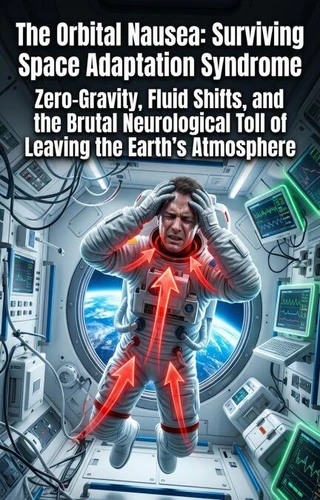
The Orbital Nausea: Surviving Space Adaptation Syndrome. Zero-Gravity, Fluid Shifts, and the Brutal Neurological Toll of Leaving the Earth's Atmosphere
Par :Formats :
Disponible dans votre compte client Decitre ou Furet du Nord dès validation de votre commande. Le format ePub est :
- Compatible avec une lecture sur My Vivlio (smartphone, tablette, ordinateur)
- Compatible avec une lecture sur liseuses Vivlio
- Pour les liseuses autres que Vivlio, vous devez utiliser le logiciel Adobe Digital Edition. Non compatible avec la lecture sur les liseuses Kindle, Remarkable et Sony
 , qui est-ce ?
Notre partenaire de plateforme de lecture numérique où vous retrouverez l'ensemble de vos ebooks gratuitement
Pour en savoir plus sur nos ebooks, consultez notre aide en ligne ici
C'est si simple ! Lisez votre ebook avec l'app Vivlio sur votre tablette, mobile ou ordinateur :

- Nombre de pages175
- FormatePub
- ISBN978-3-565-46662-7
- EAN9783565466627
- Date de parution29/05/2026
- Protection num.pas de protection
- Taille806 Ko
- Infos supplémentairesepub
- ÉditeurEmphaloz Publishing House
Résumé
What actually happens to the highly trained, physically perfect human body during its first 48 hours in the weightlessness of orbit? Before astronauts can marvel at the cosmos, the vast majority must endure the debilitating, agonizing reality of Space Adaptation Syndrome (SAS), often referred to simply as "space sickness."
Without gravity anchoring the body's internal systems, two catastrophic biological glitches occur immediately.
First, the vestibular system in the inner ear, which relies on gravity to tell the brain which way is "down, " goes into absolute panic, causing severe, relentless nausea and spatial disorientation. Second, the bodily fluids normally pulled into the legs by gravity rapidly shift upward into the chest and head, causing facial swelling, intense sinus pressure, and a pounding headache. The astronaut's brain literally struggles to comprehend its new physics, leaving even seasoned test pilots violently ill until the neuroplasticity eventually adapts. This visceral aerospace medical guide explores the hidden, unglamorous realities of spaceflight.
It documents the desperate pharmacological countermeasures developed by NASA, the infamous Apollo 8 incident, and the immense physiological hurdles we must solve before attempting a mission to Mars. Understand the heavy biological toll of zero gravity. Space Adaptation Syndrome reveals that the hardest part of space exploration is not building the rocket, but convincing the human brain it hasn't been poisoned.
First, the vestibular system in the inner ear, which relies on gravity to tell the brain which way is "down, " goes into absolute panic, causing severe, relentless nausea and spatial disorientation. Second, the bodily fluids normally pulled into the legs by gravity rapidly shift upward into the chest and head, causing facial swelling, intense sinus pressure, and a pounding headache. The astronaut's brain literally struggles to comprehend its new physics, leaving even seasoned test pilots violently ill until the neuroplasticity eventually adapts. This visceral aerospace medical guide explores the hidden, unglamorous realities of spaceflight.
It documents the desperate pharmacological countermeasures developed by NASA, the infamous Apollo 8 incident, and the immense physiological hurdles we must solve before attempting a mission to Mars. Understand the heavy biological toll of zero gravity. Space Adaptation Syndrome reveals that the hardest part of space exploration is not building the rocket, but convincing the human brain it hasn't been poisoned.