The One Truth Behind All Faiths invites readers on a profound journey into the shared spiritual foundations beneath Christianity, Catholicism, and Buddhism. Rather than focusing on division or theological rivalry, this book explores how each tradition-despite different languages, symbols, and doctrines-ultimately seeks to answer the same human questions:Why do we suffer?How should we live?What is the deeper truth behind existence?And how can humanity move toward peace?Beginning with real-world conflicts often framed as "religious, " the book reveals that hostility rarely arises from faith itself.
Instead, identity, fear, history, and misunderstanding shape division. As the chapters unfold, the reader travels through the origins of religion, the psychology of belief, and the philosophical structures that underpin three major traditions. The book demonstrates that:- Christianity and Catholicism emphasize divine love and relational salvation.- Buddhism reveals liberation through insight and the dissolution of suffering.- All three share ethical foundations such as compassion, humility, forgiveness, and moral responsibility.- Their differences reflect cultural expression-not contradiction.
Ultimately, this book proposes a hopeful message:Truth is one, though perceived through many paths. The final chapter offers a practical vision for humanity-rooted in compassion, introspection, community, and the humility to embrace religious diversity without fear. This edition includes both the full English text and the complete Korean version in one volume, making it uniquely suited for bilingual readers and those interested in cross-cultural dialogue.
For readers seeking clarity in a divided world, spiritual harmony across traditions, or a deeper understanding of universal truth, The One Truth Behind All Faiths offers a clear, balanced, and insightful guide.
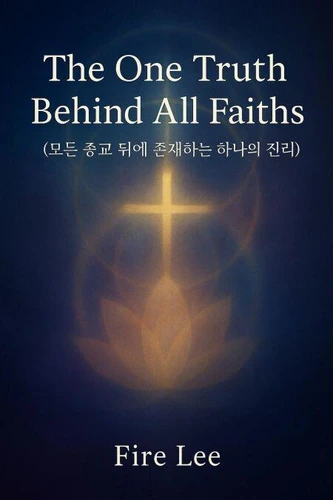
The One Truth Behind All Faiths invites readers on a profound journey into the shared spiritual foundations beneath Christianity, Catholicism, and Buddhism. Rather than focusing on division or theological rivalry, this book explores how each tradition-despite different languages, symbols, and doctrines-ultimately seeks to answer the same human questions:Why do we suffer?How should we live?What is the deeper truth behind existence?And how can humanity move toward peace?Beginning with real-world conflicts often framed as "religious, " the book reveals that hostility rarely arises from faith itself.
Instead, identity, fear, history, and misunderstanding shape division. As the chapters unfold, the reader travels through the origins of religion, the psychology of belief, and the philosophical structures that underpin three major traditions. The book demonstrates that:- Christianity and Catholicism emphasize divine love and relational salvation.- Buddhism reveals liberation through insight and the dissolution of suffering.- All three share ethical foundations such as compassion, humility, forgiveness, and moral responsibility.- Their differences reflect cultural expression-not contradiction.
Ultimately, this book proposes a hopeful message:Truth is one, though perceived through many paths. The final chapter offers a practical vision for humanity-rooted in compassion, introspection, community, and the humility to embrace religious diversity without fear. This edition includes both the full English text and the complete Korean version in one volume, making it uniquely suited for bilingual readers and those interested in cross-cultural dialogue.
For readers seeking clarity in a divided world, spiritual harmony across traditions, or a deeper understanding of universal truth, The One Truth Behind All Faiths offers a clear, balanced, and insightful guide.


 , qui est-ce ?