SOLDES
Jusqu'à -70% sur une sélection d'articles*

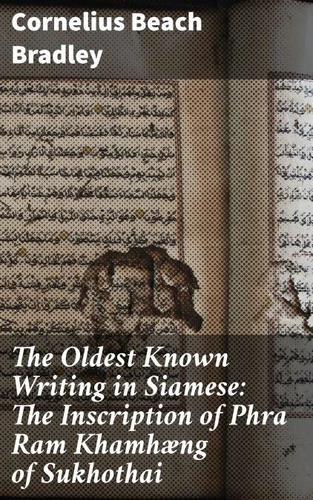
The Oldest Known Writing in Siamese: The Inscription of Phra Ram Khamhæng of Sukhothai. 1293 A.D
Par :Formats :
Disponible dans votre compte client Decitre ou Furet du Nord dès validation de votre commande. Le format ePub est :
- Compatible avec une lecture sur My Vivlio (smartphone, tablette, ordinateur)
- Compatible avec une lecture sur liseuses Vivlio
- Pour les liseuses autres que Vivlio, vous devez utiliser le logiciel Adobe Digital Edition. Non compatible avec la lecture sur les liseuses Kindle, Remarkable et Sony
 , qui est-ce ?
Notre partenaire de plateforme de lecture numérique où vous retrouverez l'ensemble de vos ebooks gratuitement
Pour en savoir plus sur nos ebooks, consultez notre aide en ligne ici
C'est si simple ! Lisez votre ebook avec l'app Vivlio sur votre tablette, mobile ou ordinateur :

- Nombre de pages62
- FormatePub
- ISBN406-4-06-606772-4
- EAN4064066067724
- Date de parution08/12/2020
- Protection num.Digital Watermarking
- Taille720 Ko
- Infos supplémentairesepub
- ÉditeurGOOD PRESS
Résumé
In "The Oldest Known Writing in Siamese: The Inscription of Phra Ram Khamh?¶ng of Sukhothai, " Cornelius Beach Bradley delves into the rich historical tapestry of Thailand through the lens of its most ancient written text. This meticulously researched work blends meticulous philological analysis with a broader examination of Siamese history and culture, situating the inscription within the socio-political landscape of the Sukhothai era.
Bradley's scholarly approach elucidates not only the linguistic nuances of the inscription but also its significance in understanding the evolution of written Thai and the cultural identity of the region. Cornelius Beach Bradley, a prominent figure in the academic exploration of Southeast Asian studies, was motivated by a profound interest in the intersection of language, history, and culture. Drawing on his background in linguistics and anthropology, Bradley sought to illuminate the underappreciated significance of early Thai inscriptions, positioning them as crucial artifacts in the understanding of Thailand's historical narrative and identity.
His passion for the region and its languages fueled the extensive fieldwork and archival research that underpin this work. This book is highly recommended for scholars, historians, and linguists alike, offering invaluable insights into ancient Thai civilization while serving as a cornerstone for further studies in Southeast Asian history. It invites readers to appreciate the intricate relationship between language and culture, providing a deeper understanding of how the past shapes contemporary identities.
Bradley's scholarly approach elucidates not only the linguistic nuances of the inscription but also its significance in understanding the evolution of written Thai and the cultural identity of the region. Cornelius Beach Bradley, a prominent figure in the academic exploration of Southeast Asian studies, was motivated by a profound interest in the intersection of language, history, and culture. Drawing on his background in linguistics and anthropology, Bradley sought to illuminate the underappreciated significance of early Thai inscriptions, positioning them as crucial artifacts in the understanding of Thailand's historical narrative and identity.
His passion for the region and its languages fueled the extensive fieldwork and archival research that underpin this work. This book is highly recommended for scholars, historians, and linguists alike, offering invaluable insights into ancient Thai civilization while serving as a cornerstone for further studies in Southeast Asian history. It invites readers to appreciate the intricate relationship between language and culture, providing a deeper understanding of how the past shapes contemporary identities.