
Sanne Blauw is the numeracy correspondent for Dutch online news site and publisher De Correspondent. She has a PhD in econometrics from the Erasmus School of Economics and the Tinbergen Institute, and was a journalist-in-residence at the Netherlands Institute for Advanced Study. Her first book, The Number Bias, was a bestseller in the Netherlands and spent several weeks on the bestseller lists.
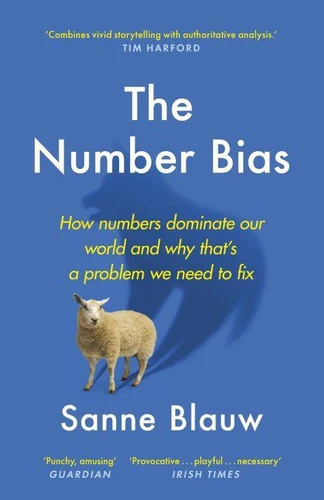
The Number Bias. How numbers dominate our world and why that's a problem we need to fix
Par : ,Formats :
Disponible dans votre compte client Decitre ou Furet du Nord dès validation de votre commande. Le format ePub protégé est :
- Compatible avec une lecture sur My Vivlio (smartphone, tablette, ordinateur)
- Compatible avec une lecture sur liseuses Vivlio
- Pour les liseuses autres que Vivlio, vous devez utiliser le logiciel Adobe Digital Edition. Non compatible avec la lecture sur les liseuses Kindle, Remarkable et Sony
- Non compatible avec un achat hors France métropolitaine
 , qui est-ce ?
Notre partenaire de plateforme de lecture numérique où vous retrouverez l'ensemble de vos ebooks gratuitement
Pour en savoir plus sur nos ebooks, consultez notre aide en ligne ici
C'est si simple ! Lisez votre ebook avec l'app Vivlio sur votre tablette, mobile ou ordinateur :

- Nombre de pages176
- FormatePub
- ISBN978-1-5293-4275-8
- EAN9781529342758
- Date de parution08/07/2020
- Protection num.Adobe DRM
- Infos supplémentairesepub
- ÉditeurSceptre
Résumé
NOW WITH NEW PROLOGUE ABOUT DEMYSTIFYING CORONAVIRUS NUMBERS, DONALD TRUMP AND WHY STATISTICS MATTER MORE THAN EVER'The Number Bias combines vivid storytelling with authoritative analysis to deliver a warning about the way numbers can lead us astray - if we let them.' TIM HARFORDEven if you don't consider yourself a numbers person, you are a numbers person. The time has come to put numbers in their place.
Not high up on a pedestal, or out on the curb, but right where they belong: beside words. It is not an overstatement to say that numbers dictate the way we live our lives. They tell us how we're doing at school, how much we weigh, who might win an election and whether the economy is booming. But numbers aren't as objective as they may seem; behind every number is a story. Yet politicians, businesses and the media often forget this - or use it for their own gain.
Sanne Blauw travels the world to unpick our relationship with numbers and demystify our misguided allegiance, from Florence Nightingale using statistics to petition for better conditions during the Crimean War to the manipulation of numbers by the American tobacco industry and the ambiguous figures peddled during the EU referendum. Taking us from the everyday numbers that govern our health and wellbeing to the statistics used to wield enormous power and influence, The Number Bias counsels us to think more wisely.'A beautifully accessible exploration of how numbers shape our lives, and the importance of accurately interpreting the statistics we are fed.' ANGELA SAINI, author of Superior
Not high up on a pedestal, or out on the curb, but right where they belong: beside words. It is not an overstatement to say that numbers dictate the way we live our lives. They tell us how we're doing at school, how much we weigh, who might win an election and whether the economy is booming. But numbers aren't as objective as they may seem; behind every number is a story. Yet politicians, businesses and the media often forget this - or use it for their own gain.
Sanne Blauw travels the world to unpick our relationship with numbers and demystify our misguided allegiance, from Florence Nightingale using statistics to petition for better conditions during the Crimean War to the manipulation of numbers by the American tobacco industry and the ambiguous figures peddled during the EU referendum. Taking us from the everyday numbers that govern our health and wellbeing to the statistics used to wield enormous power and influence, The Number Bias counsels us to think more wisely.'A beautifully accessible exploration of how numbers shape our lives, and the importance of accurately interpreting the statistics we are fed.' ANGELA SAINI, author of Superior