SOLDES
Jusqu'à -70% sur une sélection d'articles*

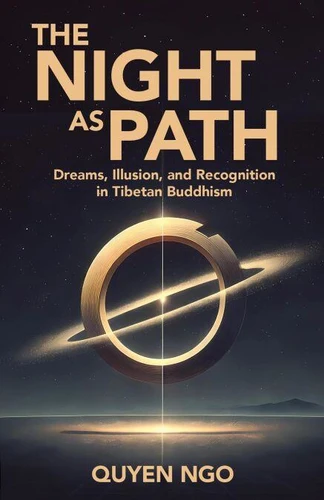
The Night as Path: Dreams, Illusion, and Recognition in Tibetan Buddhism
Par :Formats :
Disponible dans votre compte client Decitre ou Furet du Nord dès validation de votre commande. Le format ePub est :
- Compatible avec une lecture sur My Vivlio (smartphone, tablette, ordinateur)
- Compatible avec une lecture sur liseuses Vivlio
- Pour les liseuses autres que Vivlio, vous devez utiliser le logiciel Adobe Digital Edition. Non compatible avec la lecture sur les liseuses Kindle, Remarkable et Sony
 , qui est-ce ?
Notre partenaire de plateforme de lecture numérique où vous retrouverez l'ensemble de vos ebooks gratuitement
Pour en savoir plus sur nos ebooks, consultez notre aide en ligne ici
C'est si simple ! Lisez votre ebook avec l'app Vivlio sur votre tablette, mobile ou ordinateur :

- FormatePub
- ISBN978-1-923690-11-0
- EAN9781923690110
- Date de parution17/01/2026
- Protection num.pas de protection
- Infos supplémentairesepub
- ÉditeurThreshold Editions
Résumé
Dreams are often approached as experiences to interpret or control. Tibetan dream yoga treats them differently-as a place where the mind can learn how experience persuades. The Night as Path explores dream practice not as a technique for lucidity or transformation, but as a disciplined inquiry into recognition, illusion, and restraint. Drawing on Tibetan Buddhist thought, the book examines how awareness arises within dreams, how it collapses, and how it matures when interference is withheld.
Rather than offering methods for manipulating dream content, the focus remains on conditions: ethical grounding, attentional stability, and the fragile moment when belief loosens. Dreams are treated as continuous with waking life, revealing not hidden meanings but the mechanics by which experience convinces. Written for thoughtful practitioners and readers of Buddhist philosophy, The Night as Path approaches the night not as an escape, but as a terrain where the nature of experience can be seen more clearly.
Rather than offering methods for manipulating dream content, the focus remains on conditions: ethical grounding, attentional stability, and the fragile moment when belief loosens. Dreams are treated as continuous with waking life, revealing not hidden meanings but the mechanics by which experience convinces. Written for thoughtful practitioners and readers of Buddhist philosophy, The Night as Path approaches the night not as an escape, but as a terrain where the nature of experience can be seen more clearly.