
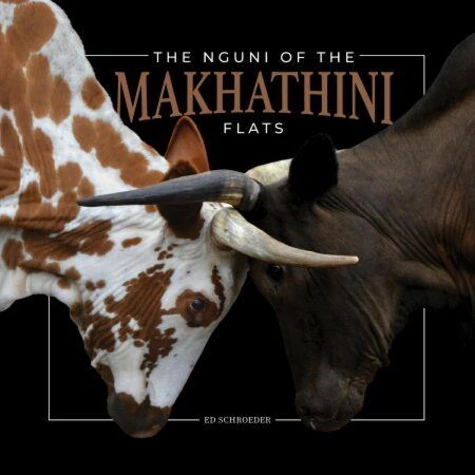
The Nguni of the Makhathini Flats
Par :Formats :
Disponible dans votre compte client Decitre ou Furet du Nord dès validation de votre commande. Le format ePub est :
- Compatible avec une lecture sur My Vivlio (smartphone, tablette, ordinateur)
- Compatible avec une lecture sur liseuses Vivlio
- Pour les liseuses autres que Vivlio, vous devez utiliser le logiciel Adobe Digital Edition. Non compatible avec la lecture sur les liseuses Kindle, Remarkable et Sony
 , qui est-ce ?
Notre partenaire de plateforme de lecture numérique où vous retrouverez l'ensemble de vos ebooks gratuitement
Pour en savoir plus sur nos ebooks, consultez notre aide en ligne ici
C'est si simple ! Lisez votre ebook avec l'app Vivlio sur votre tablette, mobile ou ordinateur :

- FormatePub
- ISBN8231963713
- EAN9798231963713
- Date de parution20/06/2025
- Protection num.pas de protection
- Infos supplémentairesepub
- ÉditeurWalzone Press
Résumé
" This book is an attempt to preserve, through their stories, part of our national heritage which will soon be lost to future generations." - Ed Schroeder" Ed has come to know the personal stories of a number of cattle - for each has its unique pattern, individual name, identity and, often, a traditional praise which makes it uniquely known to its owner ... This volume is a timely tribute to the value of the Makhathini Nguni and a plea for its traditional and intrinsic status and integrity to be respected and preserved." - Dr Marguerite Poland, author of The Abundant Herds.
The history of the Zulu people, their culture, and their Sanga-Nguni cattle have been well documented in Dr Marguerite Poland's book, The Abundant Herds (A Celebration of the Nguni Cattle of the Zulu People), and in her doctoral thesis, Uchibidolo: The Abundant Herds (A descriptive study of the Nguni Cattle of the Zulu People). Research for her book and dissertation started in 1994. The book was published in 2003 and the dissertation was submitted in 1996.
Almost a quarter of a century later, a great deal has changed and the purpose of this book is to document and preserve what remains of a particular ecotype, namely the Makhathini Nguni. In a world which is fast polarising, it is seldom one finds something that is unifying. The breeders involved with the Makhathini Nguni come from diverse cultures, religions and races across the whole spectrum of South African society.
Despite their different customs, languages, values and faiths, all are bound by their passion for the humble Makhathini cow. The stories related in this book are their stories. They have first-hand experience of the Makhathini Flats, the people that live there and their cattle.
The history of the Zulu people, their culture, and their Sanga-Nguni cattle have been well documented in Dr Marguerite Poland's book, The Abundant Herds (A Celebration of the Nguni Cattle of the Zulu People), and in her doctoral thesis, Uchibidolo: The Abundant Herds (A descriptive study of the Nguni Cattle of the Zulu People). Research for her book and dissertation started in 1994. The book was published in 2003 and the dissertation was submitted in 1996.
Almost a quarter of a century later, a great deal has changed and the purpose of this book is to document and preserve what remains of a particular ecotype, namely the Makhathini Nguni. In a world which is fast polarising, it is seldom one finds something that is unifying. The breeders involved with the Makhathini Nguni come from diverse cultures, religions and races across the whole spectrum of South African society.
Despite their different customs, languages, values and faiths, all are bound by their passion for the humble Makhathini cow. The stories related in this book are their stories. They have first-hand experience of the Makhathini Flats, the people that live there and their cattle.