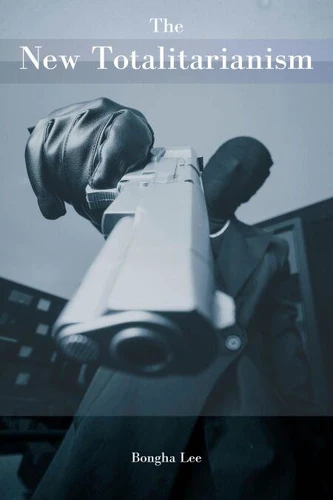
Something is off. You feel it before you can name it. The institutions still stand. They still bear their old names. But they no longer do what the names promise. The words that once ended arguments-fact, right, law, election-now start them. And every safeguard ever built to restrain power has quietly become a weapon for seizing it. You are not imagining it. You are living inside it. In The New Totalitarianism, Bongha Lee names the thing the whole world can feel and no one can see.
Not the tyranny your grandparents were warned about. Something newer. Quieter. And far harder to kill. The old totalitarianism came for you with one truth, one party, one leader, and the terror to enforce them. The new one needs none of it. Nothing is banned-everything is drowned. There is no single lie, only a flood of private realities that can never be reconciled. There are no marching masses, only isolated citizens who can no longer find each other.
There is no secret police, because you maintain the system yourself-willingly, pleasurably, at a profit. And there is no mastermind to overthrow. No architect. No face. It was not built. It emerged. And it would survive the fall of anyone now feeding on it. Then Lee reveals the engine beneath it all-and it is the most chilling turn in the book. Power used to justify itself with promises: salvation, prosperity, greatness.
Promises can be broken. The future arrives and exposes the lie. But the new legitimacy is drawn not from the future but from the past-from suffering already endured, wounds already inflicted, injustices no one can deny. A mandate built on past suffering can never be falsified, because it has already happened. It permits no argument. It admits no cross-examination. And it renders every defense our civilization ever built useless-because we designed our safeguards to stop the perpetrator, and we never imagined power that would come for us wearing the face of the victim.
From the vengeance-politics of Korea to the stolen-election crusade of the American right, from the suspended wartime ballots of Ukraine to the grievance machinery of Western Europe, Lee traces a single pattern strangling democracy on every continent at once-legally, gradually, and always in the language of virtue. Power no longer announces itself as power. It arrives as the cure for it. This is not a book for one political side.
Every mechanism it exposes runs identically on the left and the right, because the machine does not care whose flag it flies. It is not a conspiracy theory-it asks you to surrender the last comforting illusion in politics: that behind the disorder there is someone to blame, and behind them, a face. And it is not a counsel of despair. Because this power hides one fatal weakness. Invincible against every army, every party, every uprising, it cannot survive the one thing it never planned for: people who simply stop.
It will not be overthrown. It can only be outlived. And whether it is outlived comes down to a single human capacity no algorithm can allocate and no authority can grant-the capacity to stop, to see what we have been doing, and to begin again. For readers of Hannah Arendt's The Origins of Totalitarianism, Anne Applebaum's Autocracy, Inc., and Levitsky and Ziblatt's How Democracies Die, this is the book that names what those warnings only sensed coming-not the return of an old enemy, but a new one with no face to confront.
By the time you finish it, you will not be able to unsee it. Clear sight is not a step toward resistance. In the world this book describes, it is resistance-the first and most dangerous act left to you.
Something is off. You feel it before you can name it. The institutions still stand. They still bear their old names. But they no longer do what the names promise. The words that once ended arguments-fact, right, law, election-now start them. And every safeguard ever built to restrain power has quietly become a weapon for seizing it. You are not imagining it. You are living inside it. In The New Totalitarianism, Bongha Lee names the thing the whole world can feel and no one can see.
Not the tyranny your grandparents were warned about. Something newer. Quieter. And far harder to kill. The old totalitarianism came for you with one truth, one party, one leader, and the terror to enforce them. The new one needs none of it. Nothing is banned-everything is drowned. There is no single lie, only a flood of private realities that can never be reconciled. There are no marching masses, only isolated citizens who can no longer find each other.
There is no secret police, because you maintain the system yourself-willingly, pleasurably, at a profit. And there is no mastermind to overthrow. No architect. No face. It was not built. It emerged. And it would survive the fall of anyone now feeding on it. Then Lee reveals the engine beneath it all-and it is the most chilling turn in the book. Power used to justify itself with promises: salvation, prosperity, greatness.
Promises can be broken. The future arrives and exposes the lie. But the new legitimacy is drawn not from the future but from the past-from suffering already endured, wounds already inflicted, injustices no one can deny. A mandate built on past suffering can never be falsified, because it has already happened. It permits no argument. It admits no cross-examination. And it renders every defense our civilization ever built useless-because we designed our safeguards to stop the perpetrator, and we never imagined power that would come for us wearing the face of the victim.
From the vengeance-politics of Korea to the stolen-election crusade of the American right, from the suspended wartime ballots of Ukraine to the grievance machinery of Western Europe, Lee traces a single pattern strangling democracy on every continent at once-legally, gradually, and always in the language of virtue. Power no longer announces itself as power. It arrives as the cure for it. This is not a book for one political side.
Every mechanism it exposes runs identically on the left and the right, because the machine does not care whose flag it flies. It is not a conspiracy theory-it asks you to surrender the last comforting illusion in politics: that behind the disorder there is someone to blame, and behind them, a face. And it is not a counsel of despair. Because this power hides one fatal weakness. Invincible against every army, every party, every uprising, it cannot survive the one thing it never planned for: people who simply stop.
It will not be overthrown. It can only be outlived. And whether it is outlived comes down to a single human capacity no algorithm can allocate and no authority can grant-the capacity to stop, to see what we have been doing, and to begin again. For readers of Hannah Arendt's The Origins of Totalitarianism, Anne Applebaum's Autocracy, Inc., and Levitsky and Ziblatt's How Democracies Die, this is the book that names what those warnings only sensed coming-not the return of an old enemy, but a new one with no face to confront.
By the time you finish it, you will not be able to unsee it. Clear sight is not a step toward resistance. In the world this book describes, it is resistance-the first and most dangerous act left to you.

 , qui est-ce ?