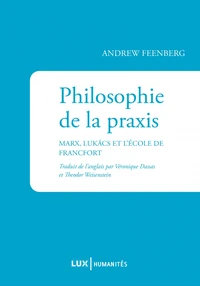
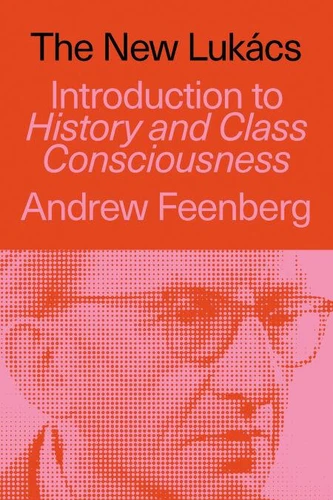
A clear guide to Lukács's History and Class Consciousness, Feenberg unlocks one of Marxism's most influential-and challenging-works for a new generation. Drawing deeply from the well of German philosophy, Lukács forged a bold, new understanding of Marxism-one that broke with the standard interpretations shaped by Engels and early orthodoxy. Here Feenberg offers clear, accessible explanations of the key concepts that define Lukács's thought: reification, totality, and praxis.
Rather than framing Marxism as a battle between idealism and materialism, Lukács illuminated the central role of consciousness, social meaning, and human agency in shaping history. Inspired by the Russian Revolution and the political upheavals that followed World War I, his vision of Marxism placed revolutionary praxis-the power of thought and action to transform reality-at its heart. Attacked by orthodox Marxists, History and Class Consciousness was marginalized for decades, its radical insights buried.
But in the 1960s, the student movements rediscovered Lukács's work, recognizing it as a foundational text of Western Marxism. Today, as new generations grapple with questions of alienation, ideology, and political change, Lukács's work feels more relevant than ever. Feenberg demystifies this classic, offering a vital guide for anyone seeking to understand, and transform, the world.
A clear guide to Lukács's History and Class Consciousness, Feenberg unlocks one of Marxism's most influential-and challenging-works for a new generation. Drawing deeply from the well of German philosophy, Lukács forged a bold, new understanding of Marxism-one that broke with the standard interpretations shaped by Engels and early orthodoxy. Here Feenberg offers clear, accessible explanations of the key concepts that define Lukács's thought: reification, totality, and praxis.
Rather than framing Marxism as a battle between idealism and materialism, Lukács illuminated the central role of consciousness, social meaning, and human agency in shaping history. Inspired by the Russian Revolution and the political upheavals that followed World War I, his vision of Marxism placed revolutionary praxis-the power of thought and action to transform reality-at its heart. Attacked by orthodox Marxists, History and Class Consciousness was marginalized for decades, its radical insights buried.
But in the 1960s, the student movements rediscovered Lukács's work, recognizing it as a foundational text of Western Marxism. Today, as new generations grapple with questions of alienation, ideology, and political change, Lukács's work feels more relevant than ever. Feenberg demystifies this classic, offering a vital guide for anyone seeking to understand, and transform, the world.

 , qui est-ce ?