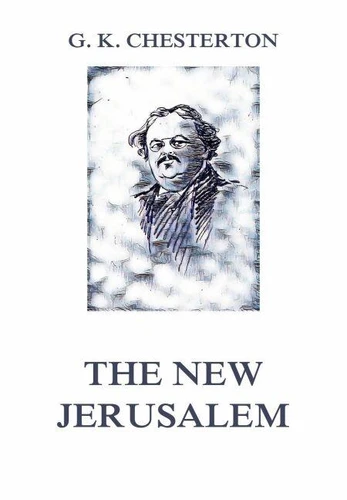
The Zionists have often spoken about the hoped-for Jewish homeland in Palestine becoming a center whence would emanate, as of old, great ideas and ideals. Such a radiation has already begun, but it is interesting, indeed curious, that among the firstlings of the New Jerusalem is a product from the very un-Hebraic pen of Mr. G. K. Chesterton. "The New Jerusalem" is an uneven book; at times a rather confusing book; but it is always thoughtful, always thought-provoking.
And when the reader is once thoroughly oriented; when he realizes that he is not perusing a birth-rate, total-population, gross-tonnage-of-export sort of thing, but rather a poetic-philosophic mosaic woven, of reflections inspired by the Holy City-then he is ready to appreciate the matter in hand. "A man cannot, " says the writer, "eat the Pyramids; he cannot buy or sell the Holy City; there can be no practical aspect either of his coming or going.
If he has not come for a poetic mood he has come for nothing."
The Zionists have often spoken about the hoped-for Jewish homeland in Palestine becoming a center whence would emanate, as of old, great ideas and ideals. Such a radiation has already begun, but it is interesting, indeed curious, that among the firstlings of the New Jerusalem is a product from the very un-Hebraic pen of Mr. G. K. Chesterton. "The New Jerusalem" is an uneven book; at times a rather confusing book; but it is always thoughtful, always thought-provoking.
And when the reader is once thoroughly oriented; when he realizes that he is not perusing a birth-rate, total-population, gross-tonnage-of-export sort of thing, but rather a poetic-philosophic mosaic woven, of reflections inspired by the Holy City-then he is ready to appreciate the matter in hand. "A man cannot, " says the writer, "eat the Pyramids; he cannot buy or sell the Holy City; there can be no practical aspect either of his coming or going.
If he has not come for a poetic mood he has come for nothing."

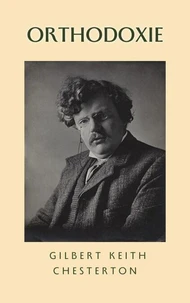
 , qui est-ce ?