
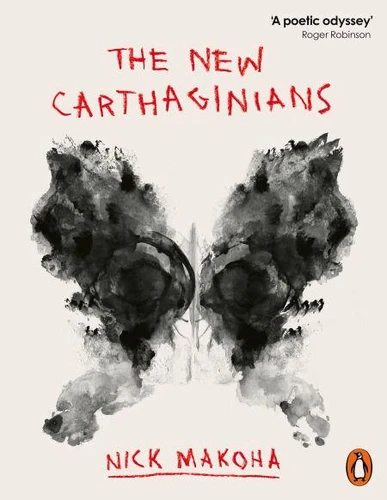
The New Carthaginians
Par :Formats :
Disponible dans votre compte client Decitre ou Furet du Nord dès validation de votre commande. Le format ePub protégé est :
- Compatible avec une lecture sur My Vivlio (smartphone, tablette, ordinateur)
- Compatible avec une lecture sur liseuses Vivlio
- Pour les liseuses autres que Vivlio, vous devez utiliser le logiciel Adobe Digital Edition. Non compatible avec la lecture sur les liseuses Kindle, Remarkable et Sony
- Non compatible avec un achat hors France métropolitaine
 , qui est-ce ?
Notre partenaire de plateforme de lecture numérique où vous retrouverez l'ensemble de vos ebooks gratuitement
Pour en savoir plus sur nos ebooks, consultez notre aide en ligne ici
C'est si simple ! Lisez votre ebook avec l'app Vivlio sur votre tablette, mobile ou ordinateur :

- Nombre de pages112
- FormatePub
- ISBN978-1-80206-708-8
- EAN9781802067088
- Date de parution27/02/2025
- Protection num.Adobe DRM
- Infos supplémentairesepub
- ÉditeurPenguin
Résumé
SHORTLISTED FOR THE TS ELIOT PRIZE 2025SHORTLISTED FOR THE JHALAK PRIZE 2026'© Codex' SHORTLISTED FOR THE FORWARD PRIZE FOR BEST SINGLE POEMLONGLISTED FOR THE GRIFFIN POETRY PRIZE 2026'Profound, sheer originality... a tantalising jigsaw puzzle of a book' Tristram Fane-Saunders, TelegraphIn The New Carthaginians, time - and with it the world - is out of joint. A hijacked plane lands at Entebbe International Airport in 1976, triggering the crisis that will lead to Idi Amin's Uganda becoming a pariah state and, within a few years, to the young Nick Makoha's flight from the country.
A mysterious writer daubs poetic slogans on the walls of late-'70s New York City, signing them SAMO©. Three characters who are also one - the Poet, a Black Icarus and a resurrected Jean-Michel Basquiat - journey through a time that is both our own and not, watching TV, discussing art and literature and tucking their wings into their jackets on the way to airport security. Concerned throughout with flight and falling, the sample and the loop, The New Carthaginians is a poetry collection of staggering originality: a work by an author at the height of his powers, in which the familiar Western canons of art, history and philosophy are prised apart and reassembled in a new configuration.
Drawing on Basquiat's technique of the 'exploded' collage, our heroes' odyssey gathers the symbols of a new mythos, through which the othering of Black life might be undone and the stage set for some fresh emergence, some transfigured understanding of myth and life. 'Hold that note, ' writes the poet. 'In this place you are no longer the chorus . In any future, remember you are a New Carthaginian.'A FINANCIAL TIMES BEST SUMMER BOOK OF POETRY 2025'In this book, Nick Makoha has found an otherworldly, visionary voice and diction that arrest you from the first page and never let you go.' Jason Allen-Paisant, Winner of the TS Eliot Prize
A mysterious writer daubs poetic slogans on the walls of late-'70s New York City, signing them SAMO©. Three characters who are also one - the Poet, a Black Icarus and a resurrected Jean-Michel Basquiat - journey through a time that is both our own and not, watching TV, discussing art and literature and tucking their wings into their jackets on the way to airport security. Concerned throughout with flight and falling, the sample and the loop, The New Carthaginians is a poetry collection of staggering originality: a work by an author at the height of his powers, in which the familiar Western canons of art, history and philosophy are prised apart and reassembled in a new configuration.
Drawing on Basquiat's technique of the 'exploded' collage, our heroes' odyssey gathers the symbols of a new mythos, through which the othering of Black life might be undone and the stage set for some fresh emergence, some transfigured understanding of myth and life. 'Hold that note, ' writes the poet. 'In this place you are no longer the chorus . In any future, remember you are a New Carthaginian.'A FINANCIAL TIMES BEST SUMMER BOOK OF POETRY 2025'In this book, Nick Makoha has found an otherworldly, visionary voice and diction that arrest you from the first page and never let you go.' Jason Allen-Paisant, Winner of the TS Eliot Prize