Blair Stonechild is a Cree-Saulteaux member of the Muscowpetung First Nation in Saskatchewan. He is a Professor of Indigenous Studies at the First Nations University of Canada, where he was first employed in 1976. He coauthored, with Bill Waiser, Loyal Till Death: Indians and the North-West Rebellion, which won the Saskatchewan Book Award and was a finalist for the 1997 Governor General's Literary Award.
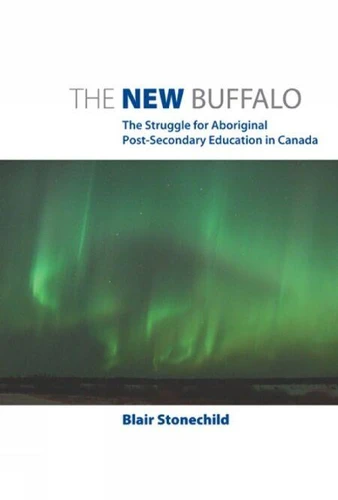
The New Buffalo. The Struggle for Aboriginal Post-Secondary Education
Par :Formats :
Disponible dans votre compte client Decitre ou Furet du Nord dès validation de votre commande. Le format ePub est :
- Compatible avec une lecture sur My Vivlio (smartphone, tablette, ordinateur)
- Compatible avec une lecture sur liseuses Vivlio
- Pour les liseuses autres que Vivlio, vous devez utiliser le logiciel Adobe Digital Edition. Non compatible avec la lecture sur les liseuses Kindle, Remarkable et Sony
 , qui est-ce ?
Notre partenaire de plateforme de lecture numérique où vous retrouverez l'ensemble de vos ebooks gratuitement
Pour en savoir plus sur nos ebooks, consultez notre aide en ligne ici
C'est si simple ! Lisez votre ebook avec l'app Vivlio sur votre tablette, mobile ou ordinateur :

- Nombre de pages182
- FormatePub
- ISBN0-88755-413-X
- EAN9780887554131
- Date de parution15/12/2006
- Protection num.Digital Watermarking
- Taille2 Mo
- Infos supplémentairesepub
- ÉditeurUniversity of Manitoba Press
Résumé
Post-secondary education, often referred to as "the new buffalo, " is a contentious but critically important issue for First Nations and the future of Canadian society. While First Nations maintain that access to and funding for higher education is an Aboriginal and Treaty right, the Canadian government insists that post-secondary education is a social program for which they have limited responsibility.
In The New Buffalo, Blair Stonechild traces the history of Aboriginal post-secondary education policy from its earliest beginnings as a government tool for assimilation and cultural suppression to its development as means of Aboriginal self-determination and self-government. With first-hand knowledge and personal experience of the Aboriginal education system, Stonechild goes beyond merely analyzing statistics and policy doctrine to reveal the shocking disparity between Aboriginal and Canadian access to education, the continued dominance of non-Aboriginals over program development, and the ongoing struggle for recognition of First Nations run institutions.
In The New Buffalo, Blair Stonechild traces the history of Aboriginal post-secondary education policy from its earliest beginnings as a government tool for assimilation and cultural suppression to its development as means of Aboriginal self-determination and self-government. With first-hand knowledge and personal experience of the Aboriginal education system, Stonechild goes beyond merely analyzing statistics and policy doctrine to reveal the shocking disparity between Aboriginal and Canadian access to education, the continued dominance of non-Aboriginals over program development, and the ongoing struggle for recognition of First Nations run institutions.