SOLDES
Jusqu'à -70% sur une sélection d'articles*

Nouveauté
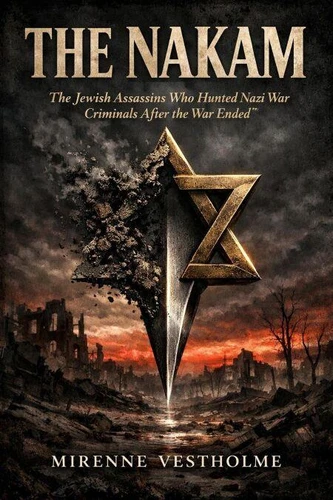
The Nakam: The Jewish Assassins Who Hunted Nazi War Criminals After the War Ended
Par :Formats :
Disponible dans votre compte client Decitre ou Furet du Nord dès validation de votre commande. Le format ePub est :
- Compatible avec une lecture sur My Vivlio (smartphone, tablette, ordinateur)
- Compatible avec une lecture sur liseuses Vivlio
- Pour les liseuses autres que Vivlio, vous devez utiliser le logiciel Adobe Digital Edition. Non compatible avec la lecture sur les liseuses Kindle, Remarkable et Sony
 , qui est-ce ?
Notre partenaire de plateforme de lecture numérique où vous retrouverez l'ensemble de vos ebooks gratuitement
Pour en savoir plus sur nos ebooks, consultez notre aide en ligne ici
C'est si simple ! Lisez votre ebook avec l'app Vivlio sur votre tablette, mobile ou ordinateur :

- FormatePub
- ISBN8235305878
- EAN9798235305878
- Date de parution05/06/2026
- Protection num.pas de protection
- Infos supplémentairesepub
- ÉditeurIoakim Ioakim
Résumé
The war ended. The killers did not pay. Six million Jews had been murdered with bureaucratic precision, their deaths organized in spreadsheets, executed on schedules, authorized by men in uniforms who would, within months, return to tending their gardens and teaching their children and collecting their pensions. Nuremberg tried twenty-two of them. Hundreds of thousands walked free. A small group of survivors decided this was unacceptable.
They called themselves Nakam. In Hebrew, the word means revenge. But what they were doing was something older and more difficult than revenge: they were insisting, at personal cost and with full awareness of what it would require of them, that the murder of six million people could not simply be absorbed into history and forgotten. That the perpetrators were not abstractions. That they had names and addresses and daily routines, and that someone knew where they were.
This is that story. Abba Kovner had already survived the Vilna Ghetto, the forests of Lithuania, two years as a hunted partisan. Vitka Kempner had smuggled weapons under the noses of the SS. Pasha Reichman had walked out of Auschwitz. Together, they built one of the most morally complex and operationally daring organizations of the twentieth century: a clandestine network of Holocaust survivors operating in occupied postwar Germany, hunting the men who had built and run the machinery of mass murder.
Their methods were not gentle. Their plans, at their most ambitious, contemplated killing on a scale that would have made the world understand what six million actually meant. Their individual operations, quieter and more targeted, found men who had assumed they were safe: former camp commanders living as schoolteachers, Gestapo officers returned to civilian life, administrators of death who were now simply administrators.
The Nakam tells this story fully for the first time in English, drawing on declassified archives, survivor testimonies, and the historical record of postwar Germany. It does not flinch from the violence. It does not offer easy moral resolution. What it offers, instead, is the truth: that these men and women faced a genuine moral problem for which no official solution existed, and that what they did about it still demands a reckoning.
This is a book about grief transformed into action. About justice that arrives too late and in the wrong form and still matters. About the question that the Holocaust poses to every generation that inherits its memory: when the systems built to prevent atrocity fail, what then?Read it in a single sitting. You will not forget it.
They called themselves Nakam. In Hebrew, the word means revenge. But what they were doing was something older and more difficult than revenge: they were insisting, at personal cost and with full awareness of what it would require of them, that the murder of six million people could not simply be absorbed into history and forgotten. That the perpetrators were not abstractions. That they had names and addresses and daily routines, and that someone knew where they were.
This is that story. Abba Kovner had already survived the Vilna Ghetto, the forests of Lithuania, two years as a hunted partisan. Vitka Kempner had smuggled weapons under the noses of the SS. Pasha Reichman had walked out of Auschwitz. Together, they built one of the most morally complex and operationally daring organizations of the twentieth century: a clandestine network of Holocaust survivors operating in occupied postwar Germany, hunting the men who had built and run the machinery of mass murder.
Their methods were not gentle. Their plans, at their most ambitious, contemplated killing on a scale that would have made the world understand what six million actually meant. Their individual operations, quieter and more targeted, found men who had assumed they were safe: former camp commanders living as schoolteachers, Gestapo officers returned to civilian life, administrators of death who were now simply administrators.
The Nakam tells this story fully for the first time in English, drawing on declassified archives, survivor testimonies, and the historical record of postwar Germany. It does not flinch from the violence. It does not offer easy moral resolution. What it offers, instead, is the truth: that these men and women faced a genuine moral problem for which no official solution existed, and that what they did about it still demands a reckoning.
This is a book about grief transformed into action. About justice that arrives too late and in the wrong form and still matters. About the question that the Holocaust poses to every generation that inherits its memory: when the systems built to prevent atrocity fail, what then?Read it in a single sitting. You will not forget it.