SOLDES
Jusqu'à -70% sur une sélection d'articles*

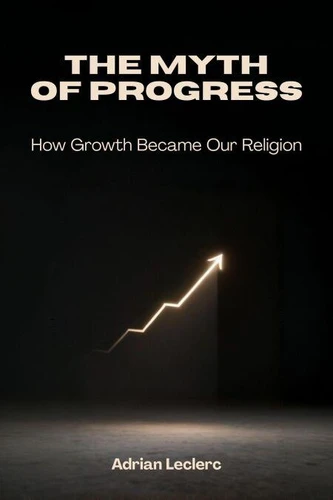
The Myth of Progress: How Growth Became Our Religion
Par :Formats :
Disponible dans votre compte client Decitre ou Furet du Nord dès validation de votre commande. Le format ePub est :
- Compatible avec une lecture sur My Vivlio (smartphone, tablette, ordinateur)
- Compatible avec une lecture sur liseuses Vivlio
- Pour les liseuses autres que Vivlio, vous devez utiliser le logiciel Adobe Digital Edition. Non compatible avec la lecture sur les liseuses Kindle, Remarkable et Sony
 , qui est-ce ?
Notre partenaire de plateforme de lecture numérique où vous retrouverez l'ensemble de vos ebooks gratuitement
Pour en savoir plus sur nos ebooks, consultez notre aide en ligne ici
C'est si simple ! Lisez votre ebook avec l'app Vivlio sur votre tablette, mobile ou ordinateur :

- FormatePub
- ISBN8233902116
- EAN9798233902116
- Date de parution06/01/2026
- Protection num.pas de protection
- Infos supplémentairesepub
- ÉditeurLinda Balsamo
Résumé
The Myth of Progress, Adrian LeclercThe Most Powerful Religion of Our Age Isn't Found in a Cathedral. It's Found in the GDP. Progress is not a fact of history; it is a story we tell to avoid tragedy. For centuries, the West has been governed by a secular faith: the belief that technology, markets, and endless economic expansion will eventually redeem humanity. In The Myth of Progress, Adrian Leclerc argues that this "Gospel of Growth" has become our dominant theology-a measurable, unquestionable creed that has deformed our relationship with nature, meaning, and our own mortality.
Moving with the historical sweep of Ronald Wright and the philosophical urgency of John Gray, Leclerc traces the evolution of our obsession with "improvement." From the Enlightenment's "civilizing missions" to the digital alchemists of Silicon Valley, the book exposes how we traded sacred time for linear time, and gratitude for a state of perpetual expectation. As we face the Age of Acceleration, we find ourselves on a treadmill to nowhere-trapped in a system where "more" is the only meaning of "better, " even as our psychological and ecological systems begin to fracture.
The Myth of Progress is not a call for alarmism, but an invitation to recovery. It is a rational, elegantly skeptical roadmap for a civilization that has lost its way. By rediscovering the "Wisdom of Limits"-the moral and ecological boundaries that once defined human greatness-Leclerc proposes a path toward a steady-state future built on enoughness, stewardship, and reverence. This is an essential inquiry for anyone who suspects that our gods of progress are dying, and that our survival depends on our ability to finally say no.
Moving with the historical sweep of Ronald Wright and the philosophical urgency of John Gray, Leclerc traces the evolution of our obsession with "improvement." From the Enlightenment's "civilizing missions" to the digital alchemists of Silicon Valley, the book exposes how we traded sacred time for linear time, and gratitude for a state of perpetual expectation. As we face the Age of Acceleration, we find ourselves on a treadmill to nowhere-trapped in a system where "more" is the only meaning of "better, " even as our psychological and ecological systems begin to fracture.
The Myth of Progress is not a call for alarmism, but an invitation to recovery. It is a rational, elegantly skeptical roadmap for a civilization that has lost its way. By rediscovering the "Wisdom of Limits"-the moral and ecological boundaries that once defined human greatness-Leclerc proposes a path toward a steady-state future built on enoughness, stewardship, and reverence. This is an essential inquiry for anyone who suspects that our gods of progress are dying, and that our survival depends on our ability to finally say no.