
Nouveauté
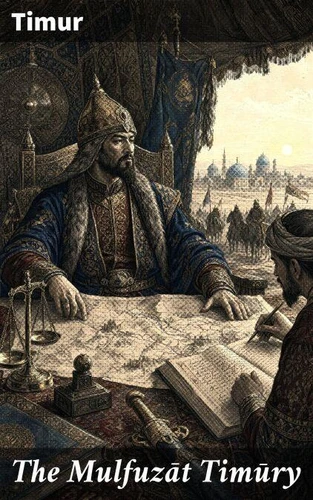
The Mulfuzāt Timūry. Autobiographical memoirs of the Moghul emperor Timūr
Par : , ,Formats :
Disponible dans votre compte client Decitre ou Furet du Nord dès validation de votre commande. Le format ePub est :
- Compatible avec une lecture sur My Vivlio (smartphone, tablette, ordinateur)
- Compatible avec une lecture sur liseuses Vivlio
- Pour les liseuses autres que Vivlio, vous devez utiliser le logiciel Adobe Digital Edition. Non compatible avec la lecture sur les liseuses Kindle, Remarkable et Sony
 , qui est-ce ?
Notre partenaire de plateforme de lecture numérique où vous retrouverez l'ensemble de vos ebooks gratuitement
Pour en savoir plus sur nos ebooks, consultez notre aide en ligne ici
C'est si simple ! Lisez votre ebook avec l'app Vivlio sur votre tablette, mobile ou ordinateur :

- Nombre de pages198
- FormatePub
- ISBN859-65--4790640-7
- EAN8596547906407
- Date de parution29/06/2026
- Protection num.Digital Watermarking
- Taille2 Mo
- Infos supplémentairesepub
- ÉditeurGOOD PRESS
Résumé
The Mulfuzat Timury, presented as the autobiographical memoirs of Timur, is a striking work of royal self-fashioning that combines martial narrative, political reflection, and ethical instruction. Framed as the emperor's own recollections, it recounts campaigns, administrative principles, and the exercise of sovereignty in a prose style at once direct and ceremonious, characteristic of Persianate court historiography.
Whether read as authentic autobiography or as a later text shaped by Timurid and Mughal ideals, it belongs to a rich literary tradition in which rulers justify conquest through order, justice, and providential destiny. Timur (1336-1405), known in Europe as Tamerlane, founded an empire stretching across Central Asia, Iran, and beyond through extraordinary military skill and relentless ambition. As a conqueror whose career transformed the political map of the late medieval Islamic world, he became the subject of both admiration and fear.
A text such as this emerges naturally from the need to codify his methods of rule, preserve his image for posterity, and articulate the principles by which force might be translated into legitimate kingship. This book is especially recommended to readers of Islamic history, empire studies, and premodern autobiography. It offers not only a vivid portrait of Timur but also a valuable window into the ideology of conquest and the literary construction of imperial memory.
Whether read as authentic autobiography or as a later text shaped by Timurid and Mughal ideals, it belongs to a rich literary tradition in which rulers justify conquest through order, justice, and providential destiny. Timur (1336-1405), known in Europe as Tamerlane, founded an empire stretching across Central Asia, Iran, and beyond through extraordinary military skill and relentless ambition. As a conqueror whose career transformed the political map of the late medieval Islamic world, he became the subject of both admiration and fear.
A text such as this emerges naturally from the need to codify his methods of rule, preserve his image for posterity, and articulate the principles by which force might be translated into legitimate kingship. This book is especially recommended to readers of Islamic history, empire studies, and premodern autobiography. It offers not only a vivid portrait of Timur but also a valuable window into the ideology of conquest and the literary construction of imperial memory.