SOLDES
Jusqu'à -70% sur une sélection d'articles*

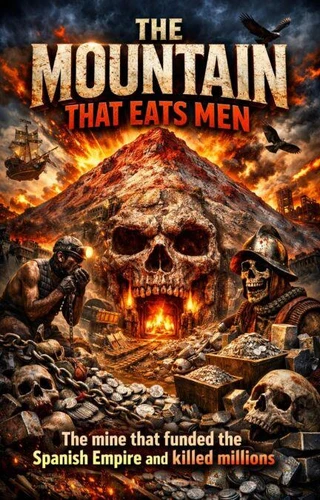
The Mountain That Eats Men. The mine that funded the Spanish Empire and killed millions
Par :Formats :
Disponible dans votre compte client Decitre ou Furet du Nord dès validation de votre commande. Le format ePub est :
- Compatible avec une lecture sur My Vivlio (smartphone, tablette, ordinateur)
- Compatible avec une lecture sur liseuses Vivlio
- Pour les liseuses autres que Vivlio, vous devez utiliser le logiciel Adobe Digital Edition. Non compatible avec la lecture sur les liseuses Kindle, Remarkable et Sony
 , qui est-ce ?
Notre partenaire de plateforme de lecture numérique où vous retrouverez l'ensemble de vos ebooks gratuitement
Pour en savoir plus sur nos ebooks, consultez notre aide en ligne ici
C'est si simple ! Lisez votre ebook avec l'app Vivlio sur votre tablette, mobile ou ordinateur :

- Nombre de pages195
- FormatePub
- ISBN978-3-565-19479-7
- EAN9783565194797
- Date de parution25/01/2026
- Protection num.pas de protection
- Taille712 Ko
- Infos supplémentairesepub
- ÉditeurEmphaloz Publishing House
Résumé
"The Mountain That Eats Men - The mine that funded the Spanish Empire and killed millions" explores the dark history of Cerro Rico (Rich Mountain) in Potosí, Bolivia. Discovered in 1545, this single mountain produced an estimated 60% of all the silver in the world during the 16th and 17th centuries. It made Spain the superpower of Europe and fueled the global economy, including China's demand for silver.
Historian Maria Oren details the human cost.
The Spanish forced indigenous people (the "mitayo") and African slaves to work in the mines in horrific conditions. The mercury used to refine the silver poisoned the air and water, turning Potosí into a "mouth of hell." It is estimated that up to eight million people died in the mines over three centuries. "The Mountain That Eats Men" connects the coins in our pockets to this tragedy. It argues that the modern global economy was born in the darkness of Potosí, built on a foundation of silver and blood.
The Spanish forced indigenous people (the "mitayo") and African slaves to work in the mines in horrific conditions. The mercury used to refine the silver poisoned the air and water, turning Potosí into a "mouth of hell." It is estimated that up to eight million people died in the mines over three centuries. "The Mountain That Eats Men" connects the coins in our pockets to this tragedy. It argues that the modern global economy was born in the darkness of Potosí, built on a foundation of silver and blood.