SOLDES
Jusqu'à -70% sur une sélection d'articles*

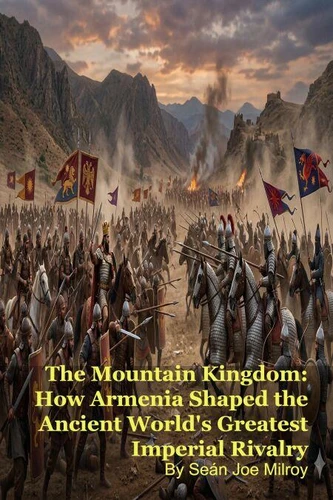
The Mountain Kingdom: How Armenia Shaped the Ancient World's Greatest Imperial Rivalry
Par :Formats :
Disponible dans votre compte client Decitre ou Furet du Nord dès validation de votre commande. Le format ePub est :
- Compatible avec une lecture sur My Vivlio (smartphone, tablette, ordinateur)
- Compatible avec une lecture sur liseuses Vivlio
- Pour les liseuses autres que Vivlio, vous devez utiliser le logiciel Adobe Digital Edition. Non compatible avec la lecture sur les liseuses Kindle, Remarkable et Sony
 , qui est-ce ?
Notre partenaire de plateforme de lecture numérique où vous retrouverez l'ensemble de vos ebooks gratuitement
Pour en savoir plus sur nos ebooks, consultez notre aide en ligne ici
C'est si simple ! Lisez votre ebook avec l'app Vivlio sur votre tablette, mobile ou ordinateur :

- FormatePub
- ISBN8233061158
- EAN9798233061158
- Date de parution18/03/2026
- Protection num.pas de protection
- Infos supplémentairesepub
- ÉditeurLinda Balsamo
Résumé
The Mountain Kingdom: How Armenia Shaped the Ancient World's Greatest Imperial RivalryFor three centuries, the fate of the ancient world was decided not in Rome or Ctesiphon but in the mountain passes and highland plateaux of a small kingdom few conquerors ever managed to hold. The Mountain Kingdom tells the story of the Roman-Parthian rivalry for Armenia, the most consequential and most enduring strategic competition of the ancient world, a contest that shaped empires, ruined treasuries, and ultimately proved impossible to resolve by military force alone.
From the campaigns of Lucullus and the catastrophe of Carrhae to the diplomatic genius of the Treaty of Rhandeia and the fatal overreach of Trajan's Persian Gulf ambitions, this book traces three centuries of warfare, diplomacy, and cultural collision across one of history's most contested frontiers. It examines how two superpowers exhausted themselves competing for a kingdom whose nakharar aristocracy, mountain geography, and remarkable cultural resilience made it ungovernable by either.
It analyses the economic costs of perpetual war, the currency debasements, the hyperinflation, the institutional collapse, that ultimately undermined both empires far more thoroughly than any battlefield defeat. And it tells the story of Armenia itself: a civilisation that survived Roman legions, Parthian cataphracts, Sasanian religious pressure, and centuries of imperial competition through the depth of its culture, the independence of its church, and the genius of a written tradition that no conqueror could extinguish.
From the campaigns of Lucullus and the catastrophe of Carrhae to the diplomatic genius of the Treaty of Rhandeia and the fatal overreach of Trajan's Persian Gulf ambitions, this book traces three centuries of warfare, diplomacy, and cultural collision across one of history's most contested frontiers. It examines how two superpowers exhausted themselves competing for a kingdom whose nakharar aristocracy, mountain geography, and remarkable cultural resilience made it ungovernable by either.
It analyses the economic costs of perpetual war, the currency debasements, the hyperinflation, the institutional collapse, that ultimately undermined both empires far more thoroughly than any battlefield defeat. And it tells the story of Armenia itself: a civilisation that survived Roman legions, Parthian cataphracts, Sasanian religious pressure, and centuries of imperial competition through the depth of its culture, the independence of its church, and the genius of a written tradition that no conqueror could extinguish.