Georges Ballin born on January 15, 1953, in a small village in the beautiful and green department of Aisne in France. Purely self-taught, decided at the age of 71 to take up writing. He embarks on the resumption of Memory and Worship Books in order to share them with the whole world. Georges Ballin né le 15 janvier 1953 dans un petit village du beau et vert département de l'Aisne en France. Purement autodidacte, décide à l'age de 71 ans de se lancer dans l'écriture. Il se lance dans la reprise des Livres de Mémoire et de Culte afin de les partager avec le monde entier. Ayant déjà ré-édité à ce jour plus de 1500 livres du domaine public sur le site Amazon Kindle.
SOLDES
Jusqu'à -70% sur une sélection d'articles*
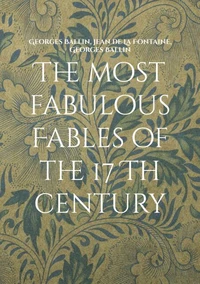
The most Fabulous fables of the 17 th Century
Par :Formats :
Disponible dans votre compte client Decitre ou Furet du Nord dès validation de votre commande. Le format ePub est :
- Compatible avec une lecture sur My Vivlio (smartphone, tablette, ordinateur)
- Compatible avec une lecture sur liseuses Vivlio
- Pour les liseuses autres que Vivlio, vous devez utiliser le logiciel Adobe Digital Edition. Non compatible avec la lecture sur les liseuses Kindle, Remarkable et Sony
 , qui est-ce ?
Notre partenaire de plateforme de lecture numérique où vous retrouverez l'ensemble de vos ebooks gratuitement
Pour en savoir plus sur nos ebooks, consultez notre aide en ligne ici
C'est si simple ! Lisez votre ebook avec l'app Vivlio sur votre tablette, mobile ou ordinateur :

- Nombre de pages286
- FormatePub
- ISBN978-2-322-49400-2
- EAN9782322494002
- Date de parution12/04/2024
- Protection num.Digital Watermarking
- Taille21 Mo
- Infos supplémentairesepub
- ÉditeurBooks on Demand
Résumé
FOR children who grew up in France before the Second World War,
memorizing the fables of the 17th century poet Jean de La Fontaine was a ritual as familiar as daily snacks of bread and bitter chocolate, placing bulletins under the tree for Santa's reading, or at the
search for the little white china that Jesus buried in our cake
Epiphany on the sixth day of the new year.
Had the praise of a peer or teacher gone to our heads? The fable of the Fox and the Raven is born: the Fox, hungry for the cheese held in the Raven's beak, flatters the bird by trying to prove that its song is as dazzling as its plumage (ramage), and collects the delicious prize when the crow opens its beak to sing.
Do we have too much confidence in appearances, our own and those of others? One of La Fontaine's many antidotes to this weakness is his tale of The Lion and the Gnat: the king of beasts arrogantly declares war on a humble insect, and is quickly defeated and slaughtered by the pernicious stings of the pipsqueak.
A propos de Georges Ballin

6,49 €

6,49 €

6,49 €