SOLDES
Jusqu'à -70% sur une sélection d'articles*

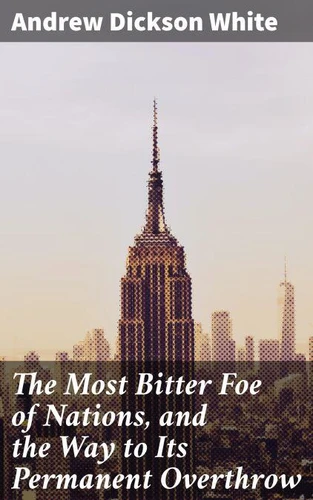
The Most Bitter Foe of Nations, and the Way to Its Permanent Overthrow. A Roadmap to Lasting Global Peace
Par :Formats :
Disponible dans votre compte client Decitre ou Furet du Nord dès validation de votre commande. Le format ePub est :
- Compatible avec une lecture sur My Vivlio (smartphone, tablette, ordinateur)
- Compatible avec une lecture sur liseuses Vivlio
- Pour les liseuses autres que Vivlio, vous devez utiliser le logiciel Adobe Digital Edition. Non compatible avec la lecture sur les liseuses Kindle, Remarkable et Sony
 , qui est-ce ?
Notre partenaire de plateforme de lecture numérique où vous retrouverez l'ensemble de vos ebooks gratuitement
Pour en savoir plus sur nos ebooks, consultez notre aide en ligne ici
C'est si simple ! Lisez votre ebook avec l'app Vivlio sur votre tablette, mobile ou ordinateur :

- Nombre de pages31
- FormatePub
- ISBN406-4-06-609500-0
- EAN4064066095000
- Date de parution19/05/2021
- Protection num.Digital Watermarking
- Taille463 Ko
- Infos supplémentairesepub
- ÉditeurGOOD PRESS
Résumé
In "The Most Bitter Foe of Nations, and the Way to Its Permanent Overthrow, " Andrew Dickson White presents a profound examination of the societal and political ramifications of war. Through a rich narrative imbued with historical context, White challenges the prevailing attitudes towards militarism and advocates for peace through education and diplomacy. His eloquent prose blends persuasive rhetoric with empirical analysis, making a compelling case for the necessity of international cooperation.
This work is situated in the intellectual milieu of the late 19th century, a period marked by industrialization and increasing global tensions, which White critiques with a blend of optimism and realism. Andrew Dickson White was not only a prominent historian and educator but also a co-founder of Syracuse University, where he championed progressive ideals, especially in foreign policy and educational reform.
His experiences as a diplomat and educator profoundly shaped his views about the destructive nature of conflict and the urgent need for reformative measures. White's deep commitment to the principles of democracy and human advancement drove him to explore the mechanisms through which nations could resolve disputes peacefully. This book is recommended for those interested in historical narratives that intertwine with contemporary issues of conflict resolution and international relations.
White's insights remain remarkably relevant, making this a crucial read for educators, policymakers, and advocates for global peace seeking to understand the intricate interplay between war and society.
This work is situated in the intellectual milieu of the late 19th century, a period marked by industrialization and increasing global tensions, which White critiques with a blend of optimism and realism. Andrew Dickson White was not only a prominent historian and educator but also a co-founder of Syracuse University, where he championed progressive ideals, especially in foreign policy and educational reform.
His experiences as a diplomat and educator profoundly shaped his views about the destructive nature of conflict and the urgent need for reformative measures. White's deep commitment to the principles of democracy and human advancement drove him to explore the mechanisms through which nations could resolve disputes peacefully. This book is recommended for those interested in historical narratives that intertwine with contemporary issues of conflict resolution and international relations.
White's insights remain remarkably relevant, making this a crucial read for educators, policymakers, and advocates for global peace seeking to understand the intricate interplay between war and society.