SOLDES
Jusqu'à -70% sur une sélection d'articles*

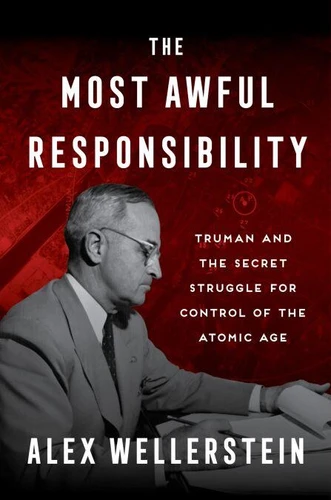
The Most Awful Responsibility. Truman and the Secret Struggle for Control of the Atomic Age
Par :Formats :
Disponible dans votre compte client Decitre ou Furet du Nord dès validation de votre commande. Le format ePub protégé est :
- Compatible avec une lecture sur My Vivlio (smartphone, tablette, ordinateur)
- Compatible avec une lecture sur liseuses Vivlio
- Pour les liseuses autres que Vivlio, vous devez utiliser le logiciel Adobe Digital Edition. Non compatible avec la lecture sur les liseuses Kindle, Remarkable et Sony
- Non compatible avec un achat hors France métropolitaine
 , qui est-ce ?
Notre partenaire de plateforme de lecture numérique où vous retrouverez l'ensemble de vos ebooks gratuitement
Pour en savoir plus sur nos ebooks, consultez notre aide en ligne ici
C'est si simple ! Lisez votre ebook avec l'app Vivlio sur votre tablette, mobile ou ordinateur :

- Nombre de pages320
- FormatePub
- ISBN978-0-06-337946-6
- EAN9780063379466
- Date de parution09/12/2025
- Protection num.Adobe DRM
- Infos supplémentairesepub
- ÉditeurHarper
Résumé
WINNER OF THE 2026 HARRY S. TRUMAN BOOK AWARD"This is historical research at its best." - Dan Carlin"I thought I knew the story but learned much that I didn't know. Outstanding!"- Richard Rhodes"A well-written opus." - The Wall Street JournalPresident Truman's choice to drop the atomic bomb is the most debated decision in the 20th Century. But what if Truman's actual decision wasn't what everyone thinks it was?The conventional narrative is that American leaders had a choice: Invade Japan, which would have cost millions of Allied and Japanese lives, or instead, use the atom bomb in the hope of convincing Japan to surrender.
Truman, the story goes, carefully weighed the pros and cons before deciding that the atomic bomb would be used against Japanese cities, as the lesser of two evils. But nuclear historian Alex Wellerstein argues that is not what happened. Based on a close reading of the historical record, The Most Awful Responsibility shows that, despite his reputation as an ardent defender of the atomic bomb, Truman:.
Wanted to avoid the "murder" and "slaughter" of innocent civilians. Believed that the atomic bomb should never be used again. Hoped that nuclear weapons would be outlawed in his lifetimeNot only did Truman not take part in the decision to use the bomb, but the one major decision that he did make was a very different one - one that he himself did not fully understand until after the atomic bomb was used.
The weight of that decision, and that misunderstanding, became the major reason that atomic bombs have not been used again since World War II. Wellerstein makes a startling case that Truman was possibly the most anti-nuclear American president of the twentieth century, but his ambitions were strongly constrained by the domestic and international politics of the postwar world and the early Cold War.
This book is a must-read for all who want to truly understand not only why the bomb was dropped on Japan but also why it has not been used since.
Truman, the story goes, carefully weighed the pros and cons before deciding that the atomic bomb would be used against Japanese cities, as the lesser of two evils. But nuclear historian Alex Wellerstein argues that is not what happened. Based on a close reading of the historical record, The Most Awful Responsibility shows that, despite his reputation as an ardent defender of the atomic bomb, Truman:.
Wanted to avoid the "murder" and "slaughter" of innocent civilians. Believed that the atomic bomb should never be used again. Hoped that nuclear weapons would be outlawed in his lifetimeNot only did Truman not take part in the decision to use the bomb, but the one major decision that he did make was a very different one - one that he himself did not fully understand until after the atomic bomb was used.
The weight of that decision, and that misunderstanding, became the major reason that atomic bombs have not been used again since World War II. Wellerstein makes a startling case that Truman was possibly the most anti-nuclear American president of the twentieth century, but his ambitions were strongly constrained by the domestic and international politics of the postwar world and the early Cold War.
This book is a must-read for all who want to truly understand not only why the bomb was dropped on Japan but also why it has not been used since.