
Dr David Whitehouse is a scientist, journalist and the author of five books, including THE SUN, THE MOON and JOURNEY TO THE CENTRE OF THE EARTH. He is a fellow of the Royal Astronomical Society and a regular broadcaster on science-related matters for the BBC and Sky News. Asteroid 4036 Whitehouse is named after him. Follow him on Twitter: @dr_david_w
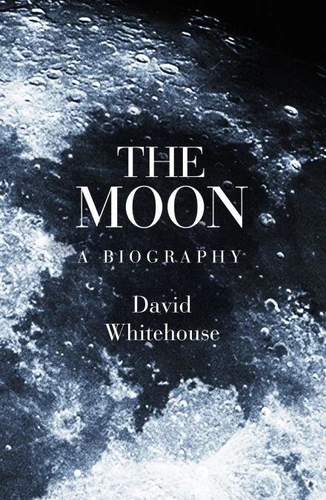
The Moon. A Biography
Par :Formats :
Disponible dans votre compte client Decitre ou Furet du Nord dès validation de votre commande. Le format ePub protégé est :
- Compatible avec une lecture sur My Vivlio (smartphone, tablette, ordinateur)
- Compatible avec une lecture sur liseuses Vivlio
- Pour les liseuses autres que Vivlio, vous devez utiliser le logiciel Adobe Digital Edition. Non compatible avec la lecture sur les liseuses Kindle, Remarkable et Sony
- Non compatible avec un achat hors France métropolitaine
 , qui est-ce ?
Notre partenaire de plateforme de lecture numérique où vous retrouverez l'ensemble de vos ebooks gratuitement
Pour en savoir plus sur nos ebooks, consultez notre aide en ligne ici
C'est si simple ! Lisez votre ebook avec l'app Vivlio sur votre tablette, mobile ou ordinateur :

- Nombre de pages320
- FormatePub
- ISBN978-1-4746-0108-5
- EAN9781474601085
- Date de parution06/04/2016
- Protection num.Adobe DRM
- Infos supplémentairesepub
- ÉditeurWeidenfeld & Nicolson
Résumé
In The Moon David Whitehouse explains how our nearest celestial neighbor was created (and what moonrocks tell us of its earth-shattering origins), and how its existence may have been a crucial factor in mankind being here at all. Whitehouse discusses how man has related to it, worshipped it and blamed it for his own 'lunacy' - though can it really affect our behavior? He tells how the first person to look at the moon through a telescope was not Galileo, as is commonly believed, but an Englishman who knew Shakespeare and had a part in the Gunpowder Plot.
While some of the story of the modern moon race may be known, the first moon race to map its surface has not been charted before, and is one of the most dramatic and unexpected stories in science. The recent discovery of ice hidden in the moon's polar regions opens up new possibilities for space travel that mean it is essential that mankind returns there if we are ever to journey to the rest of the solar system.
While some of the story of the modern moon race may be known, the first moon race to map its surface has not been charted before, and is one of the most dramatic and unexpected stories in science. The recent discovery of ice hidden in the moon's polar regions opens up new possibilities for space travel that mean it is essential that mankind returns there if we are ever to journey to the rest of the solar system.
A propos de David Whitehouse

L'échappée belle du bibliobus - Occasion
Grand Format
3,80 €



The Long Forgotten
E-book
10,99 €

12,99 €
The Sun. A Biography
E-book
3,99 €

Mobile Library
E-book
12,99 €
L'échappée belle du bibliobus
Edition en gros caractères
Edition en gros caractères
Edition en gros caractères
23,75 €