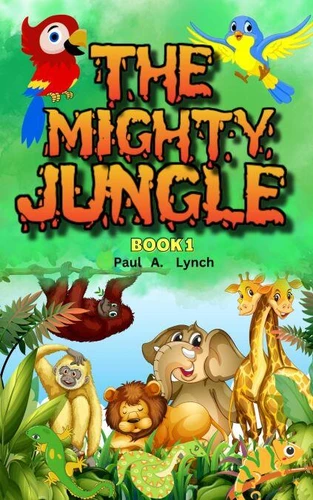
The Mighty Jungle. The Mighty Jungle, #1
Par :Formats :
Disponible dans votre compte client Decitre ou Furet du Nord dès validation de votre commande. Le format ePub est :
- Compatible avec une lecture sur My Vivlio (smartphone, tablette, ordinateur)
- Compatible avec une lecture sur liseuses Vivlio
- Pour les liseuses autres que Vivlio, vous devez utiliser le logiciel Adobe Digital Edition. Non compatible avec la lecture sur les liseuses Kindle, Remarkable et Sony
 , qui est-ce ?
Notre partenaire de plateforme de lecture numérique où vous retrouverez l'ensemble de vos ebooks gratuitement
Pour en savoir plus sur nos ebooks, consultez notre aide en ligne ici
C'est si simple ! Lisez votre ebook avec l'app Vivlio sur votre tablette, mobile ou ordinateur :

- FormatePub
- ISBN8215593974
- EAN9798215593974
- Date de parution16/02/2023
- Protection num.pas de protection
- Infos supplémentairesepub
- ÉditeurWMG Publishing
Résumé
The Amazon rainforest is the largest rainforest in the world. It covers nearly 400, 000 square miles of territory in South America. The forest is home to many animal species, including jaguars, black caimans, and pink dolphins. Some animals, like monkeys and anteaters, are abundant while others are rare- although all animals are endangered in the Amazon due to human activity. Jungle animals are dangerous to humans.
Most of them are carnivorous and have sharp teeth and claws. They're also territorial, which means they will attack if they feel threatened. Some examples of jungle animals include jaguars, monkeys, and snakes. All of these animals are dangerous, but jaguars are especially deadly. They have large canine teeth that can penetrate even thick animal skin, making them very dangerous. Jungle animals are also used for food or clothing by some people.
Many people live in the Amazon, and they hunt animals for food and clothing. They also use monkeys as sources of food, entertainment, and medicine. However, many of these people have limited resources and can't give all of their catches away; they end up eating them or selling them to make a living. Some animals have been domesticated over time for use as pets or livestock. Many species of monkeys and apes are commonly kept as pets throughout South America.
They're usually captured as babies and raised in cages before being released back into the wild. Caiman species are also commonly domesticated as pets- they're usually kept in fish tanks and never leave the enclosure.
Most of them are carnivorous and have sharp teeth and claws. They're also territorial, which means they will attack if they feel threatened. Some examples of jungle animals include jaguars, monkeys, and snakes. All of these animals are dangerous, but jaguars are especially deadly. They have large canine teeth that can penetrate even thick animal skin, making them very dangerous. Jungle animals are also used for food or clothing by some people.
Many people live in the Amazon, and they hunt animals for food and clothing. They also use monkeys as sources of food, entertainment, and medicine. However, many of these people have limited resources and can't give all of their catches away; they end up eating them or selling them to make a living. Some animals have been domesticated over time for use as pets or livestock. Many species of monkeys and apes are commonly kept as pets throughout South America.
They're usually captured as babies and raised in cages before being released back into the wild. Caiman species are also commonly domesticated as pets- they're usually kept in fish tanks and never leave the enclosure.
A propos de Paul A. Lynch



The Story of David
E-book
3,49 €

The Story of Elijah
E-book
3,49 €

3,49 €

The Story of Daniel
E-book
3,49 €

3,49 €
3,49 €

Whispers in the Meadow
E-book
3,49 €
3,49 €


3,49 €

3,49 €
3,49 €

3,49 €

Cricket In New Delhi
E-book
3,49 €

3,49 €
3,49 €