SOLDES
Jusqu'à -70% sur une sélection d'articles*

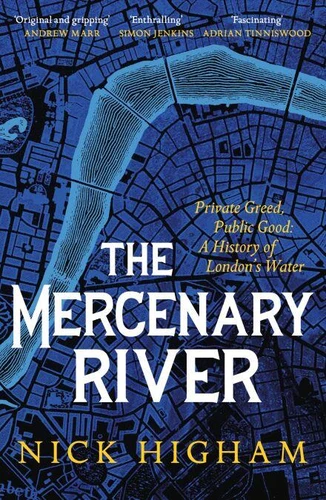
The Mercenary River. Private Greed, Public Good: A History of London's Water
Par :Formats :
Disponible dans votre compte client Decitre ou Furet du Nord dès validation de votre commande. Le format ePub protégé est :
- Compatible avec une lecture sur My Vivlio (smartphone, tablette, ordinateur)
- Compatible avec une lecture sur liseuses Vivlio
- Pour les liseuses autres que Vivlio, vous devez utiliser le logiciel Adobe Digital Edition. Non compatible avec la lecture sur les liseuses Kindle, Remarkable et Sony
- Non compatible avec un achat hors France métropolitaine
 , qui est-ce ?
Notre partenaire de plateforme de lecture numérique où vous retrouverez l'ensemble de vos ebooks gratuitement
Pour en savoir plus sur nos ebooks, consultez notre aide en ligne ici
C'est si simple ! Lisez votre ebook avec l'app Vivlio sur votre tablette, mobile ou ordinateur :

- Nombre de pages304
- FormatePub
- ISBN978-1-4722-8384-9
- EAN9781472283849
- Date de parution13/04/2022
- Protection num.Adobe DRM
- Infos supplémentairesepub
- ÉditeurHeadline
Résumé
Anyone interested in the real London needs to read this. - Andrew MarrNo city can survive without water, and lots of it. Today we take the stuff for granted: turn a tap and it gushes out. But it wasn't always so. For centuries London, one of the largest and richest cities in the world, struggled to supply its citizens with reliable, clean water. The Mercenary River tells the story of that struggle from the middle ages to the present day.
Based on new research, it tells a tale of remarkable technological, scientific and organisational breakthroughs; but also a story of greed and complacency, high finance and low politics. Among the breakthroughs was the picturesque New River, neither new nor a river but a state of the art aqueduct completed in 1613 and still part of London's water supply: the company that built it was one of the very first modern business corporations, and also one of the most profitable.
London water companies were early adopters of steam power for their pumps. And Chelsea Waterworks was the first in the world to filter the water it supplied its customers: the same technique is still used to purify two-thirds of London's drinking water. But for much of London's history water had to be rationed, and the book also chronicles our changing relationship with water and the way we use it.
Amongst many stories, Nick Higham's page-turning narrative uncovers the murky tale of how the most powerful steam engine in the world was first brought to London; the extraordinary story of how one Victorian London water company deliberately cut off 2, 000 households, even though it knew they had no alternative source of supply; the details of a financial scandal which brought two of the water companies close to collapse in the 1870s; and finally asks whether today's 21st century water companies are an improvement on their Victorian predecessors.
Based on new research, it tells a tale of remarkable technological, scientific and organisational breakthroughs; but also a story of greed and complacency, high finance and low politics. Among the breakthroughs was the picturesque New River, neither new nor a river but a state of the art aqueduct completed in 1613 and still part of London's water supply: the company that built it was one of the very first modern business corporations, and also one of the most profitable.
London water companies were early adopters of steam power for their pumps. And Chelsea Waterworks was the first in the world to filter the water it supplied its customers: the same technique is still used to purify two-thirds of London's drinking water. But for much of London's history water had to be rationed, and the book also chronicles our changing relationship with water and the way we use it.
Amongst many stories, Nick Higham's page-turning narrative uncovers the murky tale of how the most powerful steam engine in the world was first brought to London; the extraordinary story of how one Victorian London water company deliberately cut off 2, 000 households, even though it knew they had no alternative source of supply; the details of a financial scandal which brought two of the water companies close to collapse in the 1870s; and finally asks whether today's 21st century water companies are an improvement on their Victorian predecessors.