
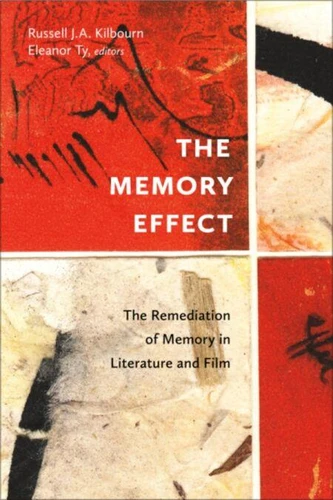
The Memory Effect. The Remediation of Memory in Literature and Film
Par : ,Formats :
Disponible dans votre compte client Decitre ou Furet du Nord dès validation de votre commande. Le format ePub est :
- Compatible avec une lecture sur My Vivlio (smartphone, tablette, ordinateur)
- Compatible avec une lecture sur liseuses Vivlio
- Pour les liseuses autres que Vivlio, vous devez utiliser le logiciel Adobe Digital Edition. Non compatible avec la lecture sur les liseuses Kindle, Remarkable et Sony
 , qui est-ce ?
Notre partenaire de plateforme de lecture numérique où vous retrouverez l'ensemble de vos ebooks gratuitement
Pour en savoir plus sur nos ebooks, consultez notre aide en ligne ici
C'est si simple ! Lisez votre ebook avec l'app Vivlio sur votre tablette, mobile ou ordinateur :

- Nombre de pages364
- FormatePub
- ISBN978-1-55458-916-6
- EAN9781554589166
- Date de parution25/03/2014
- Protection num.Digital Watermarking
- Taille8 Mo
- Infos supplémentairesepub
- ÉditeurWilfrid Laurier University Press
Résumé
The Memory Effect is a collection of essays on the status of memory-individual and collective, cultural and transcultural-in contemporary literature, film, and other visual media. Contributors look at memory's representation, adaptation, translation, and appropriation, as well as its mediation and remediation. Memory's irreducibly constructed nature is explored, even as its status is reaffirmed as the basis of both individual and collective identity.
The book begins with an overview of the field, with an emphasis on the question of subjectivity. Under the section title Memory Studies: Theories, Changes, and Challenges, these chapters lay the theoretical groundwork for the volume. Section 2, Literature and the Power of Cultural Memory/Memorializing, focuses on the relation between literature and cultural memory. Section 3, Recuperating Lives: Memory and Life Writing, shifts the focus from literature to autobiography and life writing, especially those lives shaped by trauma and forgotten by history.
Section 4, Cinematic Remediations: Memory and History, examines specific films in an effort to account for cinema's intimate and mutually constitutive relationship with memory and history. The final section, Multi-Media Interventions: Television, Video, and Collective Memory, considers individual and collective memory in the context of contemporary visual texts, at the crossroads of popular and avant-garde cultures.
The book begins with an overview of the field, with an emphasis on the question of subjectivity. Under the section title Memory Studies: Theories, Changes, and Challenges, these chapters lay the theoretical groundwork for the volume. Section 2, Literature and the Power of Cultural Memory/Memorializing, focuses on the relation between literature and cultural memory. Section 3, Recuperating Lives: Memory and Life Writing, shifts the focus from literature to autobiography and life writing, especially those lives shaped by trauma and forgotten by history.
Section 4, Cinematic Remediations: Memory and History, examines specific films in an effort to account for cinema's intimate and mutually constitutive relationship with memory and history. The final section, Multi-Media Interventions: Television, Video, and Collective Memory, considers individual and collective memory in the context of contemporary visual texts, at the crossroads of popular and avant-garde cultures.