SOLDES
Jusqu'à -70% sur une sélection d'articles*

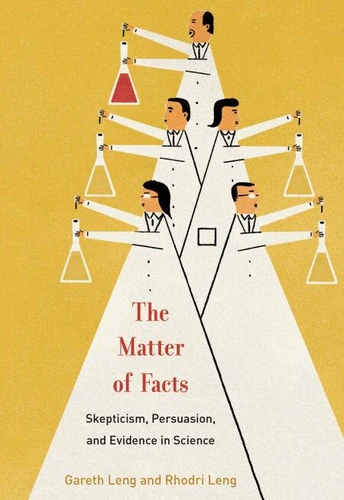
The Matter of Facts. Skepticism, Persuasion, and Evidence in Science
Par : ,Formats :
Disponible dans votre compte client Decitre ou Furet du Nord dès validation de votre commande. Le format ePub protégé est :
- Compatible avec une lecture sur My Vivlio (smartphone, tablette, ordinateur)
- Compatible avec une lecture sur liseuses Vivlio
- Pour les liseuses autres que Vivlio, vous devez utiliser le logiciel Adobe Digital Edition. Non compatible avec la lecture sur les liseuses Kindle, Remarkable et Sony
- Non compatible avec un achat hors France métropolitaine
 , qui est-ce ?
Notre partenaire de plateforme de lecture numérique où vous retrouverez l'ensemble de vos ebooks gratuitement
Pour en savoir plus sur nos ebooks, consultez notre aide en ligne ici
C'est si simple ! Lisez votre ebook avec l'app Vivlio sur votre tablette, mobile ou ordinateur :

- Nombre de pages376
- FormatePub
- ISBN978-0-262-35828-6
- EAN9780262358286
- Date de parution18/03/2020
- Protection num.Adobe DRM
- Taille563 Ko
- Infos supplémentairesepub
- ÉditeurThe MIT Press
Résumé
PRODUCING AND USING SCIENTIFIC EVIDENCE: A fascinating study of how biases, the desire for a good narrative, and other problems undermine confidence in modern science. Modern science is built on experimental evidence, yet scientists are often very selective in deciding what evidence to use and tend to disagree about how to interpret it. In The Matter of Facts, Gareth and Rhodri Leng explore how scientists produce and use evidence.
They do so to contextualize an array of problems confronting modern science that have raised concerns about its reliability: the widespread use of inappropriate statistical tests, a shortage of replication studies, and a bias in both publishing and citing "positive" results. Before these problems can be addressed meaningfully, the authors argue, we must understand what makes science work and what leads it astray.
The myth of science is that scientists constantly challenge their own thinking. But in reality, all scientists are in the business of persuading other scientists of the importance of their own ideas, and they do so by combining reason with rhetoric. Often, they look for evidence that will support their ideas, not for evidence that might contradict them; often, they present evidence in a way that makes it appear to be supportive; and often, they ignore inconvenient evidence.
In a series of essays focusing on controversies, disputes, and discoveries, the authors vividly portray science as a human activity, driven by passion as well as by reason. By analyzing the fluidity of scientific concepts and the dynamic and unpredictable development of scientific fields, the authors paint a picture of modern science and the pressures it faces.
They do so to contextualize an array of problems confronting modern science that have raised concerns about its reliability: the widespread use of inappropriate statistical tests, a shortage of replication studies, and a bias in both publishing and citing "positive" results. Before these problems can be addressed meaningfully, the authors argue, we must understand what makes science work and what leads it astray.
The myth of science is that scientists constantly challenge their own thinking. But in reality, all scientists are in the business of persuading other scientists of the importance of their own ideas, and they do so by combining reason with rhetoric. Often, they look for evidence that will support their ideas, not for evidence that might contradict them; often, they present evidence in a way that makes it appear to be supportive; and often, they ignore inconvenient evidence.
In a series of essays focusing on controversies, disputes, and discoveries, the authors vividly portray science as a human activity, driven by passion as well as by reason. By analyzing the fluidity of scientific concepts and the dynamic and unpredictable development of scientific fields, the authors paint a picture of modern science and the pressures it faces.