SOLDES
Jusqu'à -70% sur une sélection d'articles*

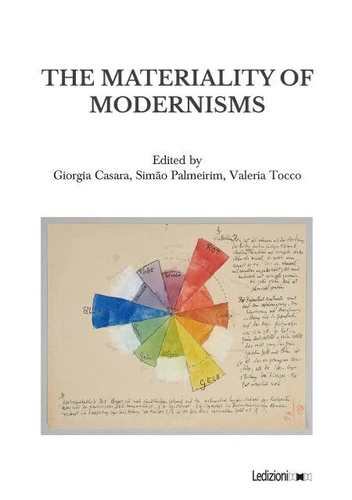
The Materiality of Modernisms
Par : , ,Formats :
Disponible dans votre compte client Decitre ou Furet du Nord dès validation de votre commande. Le format ePub est :
- Compatible avec une lecture sur My Vivlio (smartphone, tablette, ordinateur)
- Compatible avec une lecture sur liseuses Vivlio
- Pour les liseuses autres que Vivlio, vous devez utiliser le logiciel Adobe Digital Edition. Non compatible avec la lecture sur les liseuses Kindle, Remarkable et Sony
 , qui est-ce ?
Notre partenaire de plateforme de lecture numérique où vous retrouverez l'ensemble de vos ebooks gratuitement
Pour en savoir plus sur nos ebooks, consultez notre aide en ligne ici
C'est si simple ! Lisez votre ebook avec l'app Vivlio sur votre tablette, mobile ou ordinateur :

- Nombre de pages592
- FormatePub
- ISBN1256005345
- EAN9791256005345
- Date de parution31/10/2025
- Protection num.Digital Watermarking
- Taille25 Mo
- Infos supplémentairesepub
- ÉditeurLedizioni
Résumé
In the last decades, the material and medial turn has profoundly reshaped how we approach literature, art, and culture. Rather than conceiving works exclusively as vehicles of representation, scholars have become increasingly attentive to the ways in which texts, images, and performances are produced, transmitted, and received through material supports and technical media. Thus, the modernist field is no longer seen as a closed canon of exemplary works and authors.
Instead, the plurality of modernisms - literary, visual, performative, and crossdisciplinary - has become a guiding concept. By interrogating the infrastructures, artefacts, and supports of modernist production, we encounter not one but many modernisms: sometimes complementary, sometimes contradictory, always historically situated. The same happens for each essay presented here, which contributes in a very specific way to a key proposition debated during the 3rd CEMS conference in Lisbon and consolidated in this volume: materiality is not simply a property of objects but a performative process that shapes meaning, perception, and forms of knowledge production and conception.
Instead, the plurality of modernisms - literary, visual, performative, and crossdisciplinary - has become a guiding concept. By interrogating the infrastructures, artefacts, and supports of modernist production, we encounter not one but many modernisms: sometimes complementary, sometimes contradictory, always historically situated. The same happens for each essay presented here, which contributes in a very specific way to a key proposition debated during the 3rd CEMS conference in Lisbon and consolidated in this volume: materiality is not simply a property of objects but a performative process that shapes meaning, perception, and forms of knowledge production and conception.