Nouveauté
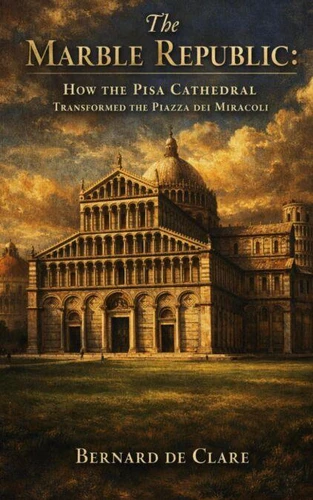
The Marble Republic: How the Pisa Cathedral Transformed the Piazza dei Miracoli. Italy’s Sacred Architecture, #18
Par :Formats :
Disponible dans votre compte client Decitre ou Furet du Nord dès validation de votre commande. Le format ePub est :
- Compatible avec une lecture sur My Vivlio (smartphone, tablette, ordinateur)
- Compatible avec une lecture sur liseuses Vivlio
- Pour les liseuses autres que Vivlio, vous devez utiliser le logiciel Adobe Digital Edition. Non compatible avec la lecture sur les liseuses Kindle, Remarkable et Sony
 , qui est-ce ?
Notre partenaire de plateforme de lecture numérique où vous retrouverez l'ensemble de vos ebooks gratuitement
Pour en savoir plus sur nos ebooks, consultez notre aide en ligne ici
C'est si simple ! Lisez votre ebook avec l'app Vivlio sur votre tablette, mobile ou ordinateur :

- FormatePub
- ISBN8233723773
- EAN9798233723773
- Date de parution22/07/2026
- Protection num.pas de protection
- Infos supplémentairesepub
- ÉditeurLinda Balsamo
Résumé
What if the stones of Europe's greatest cathedral could speak of naval victories, holy relics, and the birth of sacred art?In 1063, the fleet of the maritime Republic of Pisa broke the harbor chains of Saracen Palermo, returning laden with spoils that would alter the course of Western architecture. They did not build a fortress or a royal palace; they raised a grand sanctuary dedicated to the Assumption of the Blessed Virgin Mary.
Beyond the famous tilt of its bell tower lies a story of medieval faith, Islamic motifs reconciled under Christian theology, and marble carved to direct the soul toward the divine. Did an Italian republic build a temple of stone, or did the temple build the republic?The Marble Republic: How the Pisa Cathedral Transformed the Piazza dei Miracoli takes you beyond basic tourism and into the heart of a medieval sacred sanctuary.
Author Bernard de Clare examines the exact historical record, detailing how architect Buscheto fused Classical Roman granite columns with Islamic geometric arches, and how master sculptor Giovanni Pisano transformed Gothic marble into emotional Gospel narrative. From the consecration by Pope Gelasius II in 1118 to the catastrophic fire of 1595 that spurred a post-Tridentine Renaissance rebirth under the Medici, every chapter isolates the exact cultural and political currents that shaped this sanctuary.
This book explores the direct intersection of Catholic faith and historic breakthroughs. Learn how Galileo Galilei derived his physical law of isochronism by watching the slow rhythm of a bronze incense lamp swinging from the cathedral's nave rafters. Discover how Crusade-era archbishops filled the adjacent Camposanto with soil brought directly from Mount Golgotha, bringing the physical earth of Christ's passion to Italian ground.
Uncover how this sanctuary survived artillery barrages in World War II and centuries of shifting alluvial clay beneath its foundation. Designed for those who demand precise historical rigor alongside a deep appreciation for sacred spaces, The Marble Republic delivers a thorough account of the sanctuary that defined Pisan Romanesque architecture. If you seek to understand how sacred art, civic rivalry, and genuine devotion forged one of the world's most recognizable holy sites, step inside these pages. Will you view the Piazza dei Miracoli as a mere photograph, or will you uncover the spiritual, architectural, and historical forces that carved it into sacred ground?
Beyond the famous tilt of its bell tower lies a story of medieval faith, Islamic motifs reconciled under Christian theology, and marble carved to direct the soul toward the divine. Did an Italian republic build a temple of stone, or did the temple build the republic?The Marble Republic: How the Pisa Cathedral Transformed the Piazza dei Miracoli takes you beyond basic tourism and into the heart of a medieval sacred sanctuary.
Author Bernard de Clare examines the exact historical record, detailing how architect Buscheto fused Classical Roman granite columns with Islamic geometric arches, and how master sculptor Giovanni Pisano transformed Gothic marble into emotional Gospel narrative. From the consecration by Pope Gelasius II in 1118 to the catastrophic fire of 1595 that spurred a post-Tridentine Renaissance rebirth under the Medici, every chapter isolates the exact cultural and political currents that shaped this sanctuary.
This book explores the direct intersection of Catholic faith and historic breakthroughs. Learn how Galileo Galilei derived his physical law of isochronism by watching the slow rhythm of a bronze incense lamp swinging from the cathedral's nave rafters. Discover how Crusade-era archbishops filled the adjacent Camposanto with soil brought directly from Mount Golgotha, bringing the physical earth of Christ's passion to Italian ground.
Uncover how this sanctuary survived artillery barrages in World War II and centuries of shifting alluvial clay beneath its foundation. Designed for those who demand precise historical rigor alongside a deep appreciation for sacred spaces, The Marble Republic delivers a thorough account of the sanctuary that defined Pisan Romanesque architecture. If you seek to understand how sacred art, civic rivalry, and genuine devotion forged one of the world's most recognizable holy sites, step inside these pages. Will you view the Piazza dei Miracoli as a mere photograph, or will you uncover the spiritual, architectural, and historical forces that carved it into sacred ground?