SOLDES
Jusqu'à -70% sur une sélection d'articles*

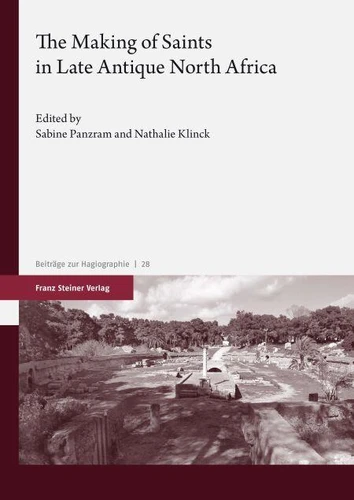
The Making of Saints in Late Antique North Africa
Par : ,Formats :
Disponible dans votre compte client Decitre ou Furet du Nord dès validation de votre commande. Le format PDF est :
- Compatible avec une lecture sur My Vivlio (smartphone, tablette, ordinateur)
- Compatible avec une lecture sur liseuses Vivlio
- Pour les liseuses autres que Vivlio, vous devez utiliser le logiciel Adobe Digital Edition. Non compatible avec la lecture sur les liseuses Kindle, Remarkable et Sony
 , qui est-ce ?
Notre partenaire de plateforme de lecture numérique où vous retrouverez l'ensemble de vos ebooks gratuitement
Pour en savoir plus sur nos ebooks, consultez notre aide en ligne ici
C'est si simple ! Lisez votre ebook avec l'app Vivlio sur votre tablette, mobile ou ordinateur :

- Nombre de pages347
- FormatPDF
- ISBN978-3-515-13728-7
- EAN9783515137287
- Date de parution25/07/2024
- Protection num.Digital Watermarking
- Taille14 Mo
- Infos supplémentairespdf
- ÉditeurFranz Steiner
Résumé
The "Making of Saints" is a phenomenon of central significance to Christianity since a vision-inspired Ambrosius discovered the remains of the martyrs Gervasius and Protasius in 386 AD in Milan. In North Africa it seems to have taken on an extremely interesting form that makes Brent D. Shaw speaking of the blood of the martyrs as "the vital force, the kinetic energy powering Christian life in Africa".
This volume contributes to the productively expanding research field of North African Christianity by providing narrative analyses on the one hand and presenting case studies from an archaeological perspective on the other, which allow a comparative perspective of the phenomenon in order to systematically combine them: narrative alone did not "make" a martyr, architectural staging too was needed - the story made the martyr and the staging made the saint.
The multidisciplinary approach brings together the most recent results concerning excavations and epigraphy, but also an innovative conceptual understanding of text, space, and - last but not least - religion, in order to examine the social function that the veneration of martyrs had in a longue durée perspective.
The multidisciplinary approach brings together the most recent results concerning excavations and epigraphy, but also an innovative conceptual understanding of text, space, and - last but not least - religion, in order to examine the social function that the veneration of martyrs had in a longue durée perspective.