SOLDES
Jusqu'à -70% sur une sélection d'articles*

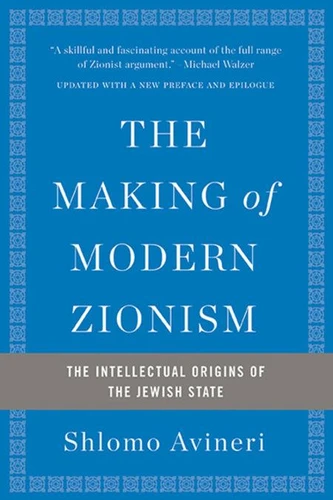
The Making of Modern Zionism. The Intellectual Origins of the Jewish State
Par :Formats :
Disponible dans votre compte client Decitre ou Furet du Nord dès validation de votre commande. Le format ePub protégé est :
- Compatible avec une lecture sur My Vivlio (smartphone, tablette, ordinateur)
- Compatible avec une lecture sur liseuses Vivlio
- Pour les liseuses autres que Vivlio, vous devez utiliser le logiciel Adobe Digital Edition. Non compatible avec la lecture sur les liseuses Kindle, Remarkable et Sony
- Non compatible avec un achat hors France métropolitaine
 , qui est-ce ?
Notre partenaire de plateforme de lecture numérique où vous retrouverez l'ensemble de vos ebooks gratuitement
Pour en savoir plus sur nos ebooks, consultez notre aide en ligne ici
C'est si simple ! Lisez votre ebook avec l'app Vivlio sur votre tablette, mobile ou ordinateur :

- Nombre de pages304
- FormatePub
- ISBN978-0-465-09480-6
- EAN9780465094806
- Date de parution03/04/2017
- Protection num.Adobe DRM
- Infos supplémentairesepub
- ÉditeurBasic Books
Résumé
An expanded edition of a classic intellectual history of Zionism, now covering the rise of religious Zionism since the 1970s For eighteen centuries pious Jews had prayed for the return to Jerusalem, but only in the revolutionary atmosphere of nineteenth-century Europe was this yearning transformed into an active political movement: Zionism. In The Making of Modern Zionism, the distinguished political scientist Shlomo Avineri rejects the common view that Zionism was solely a reaction to anti-Semitism and persecution.
Rather, he sees it as part of the universal quest for self-determination. In sharply-etched intellectual profiles of Zionism's major thinkers from Moses Hess to Theodore Herzl and from Vladimir Jabotinsky to David Ben Gurion, Avineri traces the evolution of this quest from its intellectual origins in the early nineteenth century to the establishment of the State of Israel. In an expansive new epilogue, he tracks the changes in Israeli society and politics since 1967 which have strengthened the more radical nationalist and religious trends in Zionism at the expense of its more liberal strains.
The result is a book that enables us to understand, as perhaps never before, one of the truly revolutionary ideas of our time.
Rather, he sees it as part of the universal quest for self-determination. In sharply-etched intellectual profiles of Zionism's major thinkers from Moses Hess to Theodore Herzl and from Vladimir Jabotinsky to David Ben Gurion, Avineri traces the evolution of this quest from its intellectual origins in the early nineteenth century to the establishment of the State of Israel. In an expansive new epilogue, he tracks the changes in Israeli society and politics since 1967 which have strengthened the more radical nationalist and religious trends in Zionism at the expense of its more liberal strains.
The result is a book that enables us to understand, as perhaps never before, one of the truly revolutionary ideas of our time.