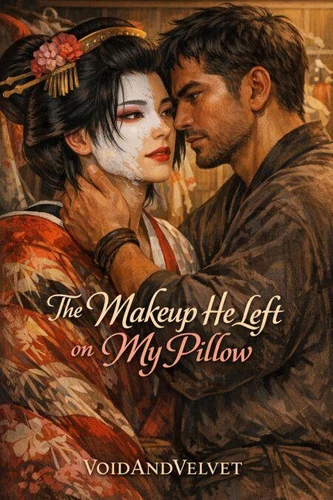
He almost didn't go in. The door was ajar, the lantern burning low - and Tatsu was a man who had spent years converting every feeling into function, every wanting into work. He pushed the door open anyway. What he found inside the Nakamura-za's costume room that night, in a performer half-dressed and half-himself, would take five years to name. In Edo-period Japan, security captain Kadowaki Tatsu has built his life around one principle: notice everything, say nothing, want nothing you cannot protect.
He is very good at this. He has had to be. When a posting opens at the Nakamura-za - the city's most celebrated kabuki theater - he takes it for reasons he writes in no log. Its principal onnagata, the acclaimed Nishimura Rei, is returning from a two-year absence. Tatsu has been waiting, without admitting it, for two years. Rei is the most extraordinary performer in Edo, a man whose entire art is the construction of a face the world will believe - and whose private life has taught him that the only safe distance is the one you create first.
Five years ago, something between them was interrupted before it could be named. Rei left without explanation. Tatsu invented one, and spent five years believing it. Now they share the same building, the same corridors, the same careful silence - and the fiction is beginning to cost more than either of them can afford. What follows is a story about two people who have learned, at significant cost, to protect themselves from exactly what they need.
Told in the dual voice of a man who speaks in inventory and a man who speaks in performance, The Nakamura-za moves through the rituals of the theater - its patron economy, its hierarchies of beauty and debt, its knowledge that every story is being told twice - toward a reckoning that arrives not with drama but with the particular honesty of a room sealed by a typhoon, in the dark, with nowhere left to go.
This is a novel about the word after survival. About the distance between understanding why you're afraid and being able to stop. About the evidence that stays in the fabric even after the body has gone.
He almost didn't go in. The door was ajar, the lantern burning low - and Tatsu was a man who had spent years converting every feeling into function, every wanting into work. He pushed the door open anyway. What he found inside the Nakamura-za's costume room that night, in a performer half-dressed and half-himself, would take five years to name. In Edo-period Japan, security captain Kadowaki Tatsu has built his life around one principle: notice everything, say nothing, want nothing you cannot protect.
He is very good at this. He has had to be. When a posting opens at the Nakamura-za - the city's most celebrated kabuki theater - he takes it for reasons he writes in no log. Its principal onnagata, the acclaimed Nishimura Rei, is returning from a two-year absence. Tatsu has been waiting, without admitting it, for two years. Rei is the most extraordinary performer in Edo, a man whose entire art is the construction of a face the world will believe - and whose private life has taught him that the only safe distance is the one you create first.
Five years ago, something between them was interrupted before it could be named. Rei left without explanation. Tatsu invented one, and spent five years believing it. Now they share the same building, the same corridors, the same careful silence - and the fiction is beginning to cost more than either of them can afford. What follows is a story about two people who have learned, at significant cost, to protect themselves from exactly what they need.
Told in the dual voice of a man who speaks in inventory and a man who speaks in performance, The Nakamura-za moves through the rituals of the theater - its patron economy, its hierarchies of beauty and debt, its knowledge that every story is being told twice - toward a reckoning that arrives not with drama but with the particular honesty of a room sealed by a typhoon, in the dark, with nowhere left to go.
This is a novel about the word after survival. About the distance between understanding why you're afraid and being able to stop. About the evidence that stays in the fabric even after the body has gone.


 , qui est-ce ?