SOLDES
Jusqu'à -70% sur une sélection d'articles*

Nouveauté
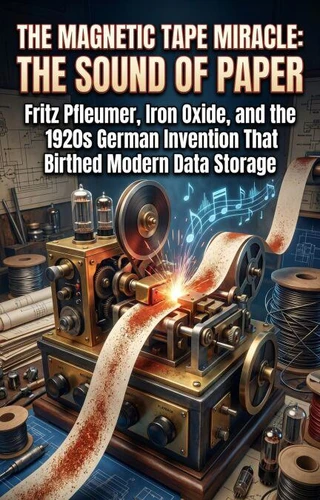
The Magnetic Tape Miracle: The Sound of Paper. Fritz Pfleumer, Iron Oxide, and the 1920s German Invention That Birthed Modern Data Storage
Par :Formats :
Disponible dans votre compte client Decitre ou Furet du Nord dès validation de votre commande. Le format ePub est :
- Compatible avec une lecture sur My Vivlio (smartphone, tablette, ordinateur)
- Compatible avec une lecture sur liseuses Vivlio
- Pour les liseuses autres que Vivlio, vous devez utiliser le logiciel Adobe Digital Edition. Non compatible avec la lecture sur les liseuses Kindle, Remarkable et Sony
 , qui est-ce ?
Notre partenaire de plateforme de lecture numérique où vous retrouverez l'ensemble de vos ebooks gratuitement
Pour en savoir plus sur nos ebooks, consultez notre aide en ligne ici
C'est si simple ! Lisez votre ebook avec l'app Vivlio sur votre tablette, mobile ou ordinateur :

- Nombre de pages189
- FormatePub
- ISBN978-3-565-46117-2
- EAN9783565461172
- Date de parution26/05/2026
- Protection num.pas de protection
- Taille852 Ko
- Infos supplémentairesepub
- ÉditeurEmphaloz Publishing House
Résumé
In the 1920s, the cutting-edge technology for recording audio involved massive, heavy steel wires that were incredibly difficult to edit and prone to violently snapping and injuring engineers. An Austrian-German engineer named Fritz Pfleumer changed the world not by improving the steel wire, but by asking a radical question: could you record a symphony on a piece of paper?
Pfleumer had previously developed a process for coating cigarette papers with bronze powder.
He realized he could use a similar technique to coat long strips of cheap paper with easily magnetizable iron oxide powder. In 1928, he patented the first magnetic tape. It was lightweight, cheap, and for the first time in history, audio could be physically "edited" by simply cutting the paper with scissors and gluing it back together. His invention laid the direct physical foundation for the cassette tape, the VHS, and the magnetic floppy disks that powered the early computer revolution. This acoustic history deconstructs the chemistry of magnetic storage.
It explores Pfleumer's partnership with the chemical giant BASF to create durable plastic tapes, the seizure of the technology by the Allies after WWII, and how the entire modern data era owes its existence to a man trying to improve cigarette paper. Capture data on dust. The Magnetic Tape Miracle reveals how coating cheap paper with iron rust created the ultimate medium for human memory.
He realized he could use a similar technique to coat long strips of cheap paper with easily magnetizable iron oxide powder. In 1928, he patented the first magnetic tape. It was lightweight, cheap, and for the first time in history, audio could be physically "edited" by simply cutting the paper with scissors and gluing it back together. His invention laid the direct physical foundation for the cassette tape, the VHS, and the magnetic floppy disks that powered the early computer revolution. This acoustic history deconstructs the chemistry of magnetic storage.
It explores Pfleumer's partnership with the chemical giant BASF to create durable plastic tapes, the seizure of the technology by the Allies after WWII, and how the entire modern data era owes its existence to a man trying to improve cigarette paper. Capture data on dust. The Magnetic Tape Miracle reveals how coating cheap paper with iron rust created the ultimate medium for human memory.