SOLDES
Jusqu'à -70% sur une sélection d'articles*

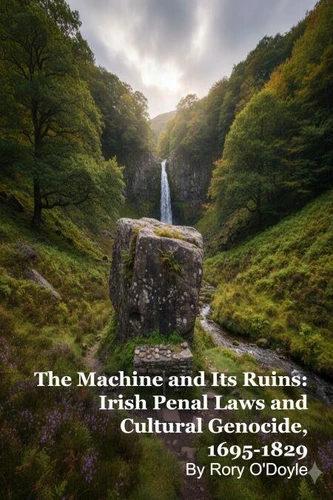
The Machine and Its Ruins: Irish Penal Laws and Cultural Genocide, 1695-1829
Par :Formats :
Disponible dans votre compte client Decitre ou Furet du Nord dès validation de votre commande. Le format ePub est :
- Compatible avec une lecture sur My Vivlio (smartphone, tablette, ordinateur)
- Compatible avec une lecture sur liseuses Vivlio
- Pour les liseuses autres que Vivlio, vous devez utiliser le logiciel Adobe Digital Edition. Non compatible avec la lecture sur les liseuses Kindle, Remarkable et Sony
 , qui est-ce ?
Notre partenaire de plateforme de lecture numérique où vous retrouverez l'ensemble de vos ebooks gratuitement
Pour en savoir plus sur nos ebooks, consultez notre aide en ligne ici
C'est si simple ! Lisez votre ebook avec l'app Vivlio sur votre tablette, mobile ou ordinateur :

- FormatePub
- ISBN8233038624
- EAN9798233038624
- Date de parution25/01/2026
- Protection num.pas de protection
- Infos supplémentairesepub
- ÉditeurLinda Balsamo
Résumé
The Machine and Its Ruins: Irish Penal Laws and Cultural Genocide, 1695-1829Between 1695 and 1829, the Irish Penal Laws constituted one of history's most comprehensive attempts at cultural genocide. This groundbreaking work examines how Protestant Britain pursued the systematic destruction of Irish Catholic culture through legal mechanisms designed to eliminate a people without mass killing-what scholar Raphael Lemkin termed "cold genocide."Drawing on extensive research, this book reveals how the Penal Laws attacked every mechanism of cultural survival: prohibiting Catholics from owning property, practicing law, voting, or receiving education; forcing subdivision of estates until Catholic holdings became unsustainable; suppressing the Irish language; criminalizing Catholic worship; and creating economic conditions that would culminate in the catastrophic Great Famine.
Yet this is also a story of extraordinary resilience-of hedge schools teaching classics in ditches, of Mass celebrated at secret rocks in the hills, of communities protecting hunted priests, and of Daniel O'Connell's genius in creating the first modern mass political movement. Through vivid narratives of individual lives alongside rigorous analysis of legal structures, this work demonstrates how cultures survive even comprehensive assault, what such survival costs, and how the machinery of oppression ultimately failed because ordinary people refused to be erased.
Essential reading for understanding cultural genocide, colonial oppression, and human resilience.
Yet this is also a story of extraordinary resilience-of hedge schools teaching classics in ditches, of Mass celebrated at secret rocks in the hills, of communities protecting hunted priests, and of Daniel O'Connell's genius in creating the first modern mass political movement. Through vivid narratives of individual lives alongside rigorous analysis of legal structures, this work demonstrates how cultures survive even comprehensive assault, what such survival costs, and how the machinery of oppression ultimately failed because ordinary people refused to be erased.
Essential reading for understanding cultural genocide, colonial oppression, and human resilience.