
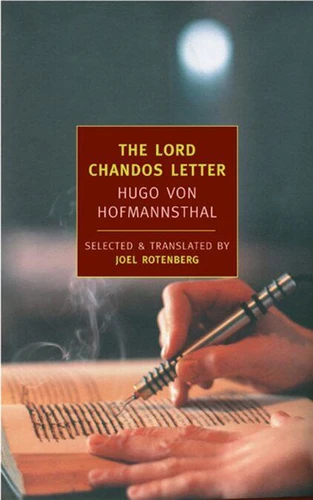
The Lord Chandos Letter. And Other Writings
Par : , ,Formats :
Disponible dans votre compte client Decitre ou Furet du Nord dès validation de votre commande. Le format ePub protégé est :
- Compatible avec une lecture sur My Vivlio (smartphone, tablette, ordinateur)
- Compatible avec une lecture sur liseuses Vivlio
- Pour les liseuses autres que Vivlio, vous devez utiliser le logiciel Adobe Digital Edition. Non compatible avec la lecture sur les liseuses Kindle, Remarkable et Sony
- Non compatible avec un achat hors France métropolitaine
 , qui est-ce ?
Notre partenaire de plateforme de lecture numérique où vous retrouverez l'ensemble de vos ebooks gratuitement
Pour en savoir plus sur nos ebooks, consultez notre aide en ligne ici
C'est si simple ! Lisez votre ebook avec l'app Vivlio sur votre tablette, mobile ou ordinateur :

- Nombre de pages152
- FormatePub
- ISBN978-1-59017-543-9
- EAN9781590175439
- Date de parution16/05/2012
- Protection num.Adobe DRM
- Taille209 Ko
- Infos supplémentairesepub
- ÉditeurNYRB Classics
Résumé
Hugo von Hoffmannsthal made his mark as a poet, as a playwright, and as the librettist for Richard Strauss's greatest operas, but he was no less accomplished as a writer of short, strangely evocative prose works. The atmospheric stories and sketches collected here-fin-de-siècle fairy tales from the Vienna of Klimt and Freud, a number of them never before translated into English-propel the reader into a shadowy world of uncanny fates and secret desires.
An aristocrat from Paris in the plague years shares a single night of passion with an unknown woman; a cavalry sergeant meets his double on the battlefield; an orphaned man withdraws from the world with his four servants, each of whom has a mysterious power over his destiny. The most influential of all of Hofmannsthal's writings is the title story, a fictional letter to the English philosopher Francis Bacon in which Lord Chandos explains why he is no longer able to write.
The "Letter" not only symbolized Hofmannsthal's own turn away from poetry, it captured the psychological crisis of faith and language which was to define the twentieth century.
An aristocrat from Paris in the plague years shares a single night of passion with an unknown woman; a cavalry sergeant meets his double on the battlefield; an orphaned man withdraws from the world with his four servants, each of whom has a mysterious power over his destiny. The most influential of all of Hofmannsthal's writings is the title story, a fictional letter to the English philosopher Francis Bacon in which Lord Chandos explains why he is no longer able to write.
The "Letter" not only symbolized Hofmannsthal's own turn away from poetry, it captured the psychological crisis of faith and language which was to define the twentieth century.