SOLDES
Jusqu'à -70% sur une sélection d'articles*

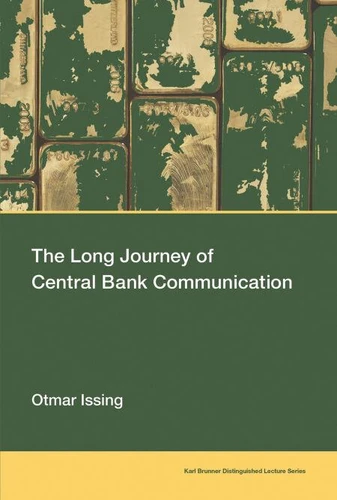
The Long Journey of Central Bank Communication
Par :Formats :
Disponible dans votre compte client Decitre ou Furet du Nord dès validation de votre commande. Le format ePub protégé est :
- Compatible avec une lecture sur My Vivlio (smartphone, tablette, ordinateur)
- Compatible avec une lecture sur liseuses Vivlio
- Pour les liseuses autres que Vivlio, vous devez utiliser le logiciel Adobe Digital Edition. Non compatible avec la lecture sur les liseuses Kindle, Remarkable et Sony
- Non compatible avec un achat hors France métropolitaine
 , qui est-ce ?
Notre partenaire de plateforme de lecture numérique où vous retrouverez l'ensemble de vos ebooks gratuitement
Pour en savoir plus sur nos ebooks, consultez notre aide en ligne ici
C'est si simple ! Lisez votre ebook avec l'app Vivlio sur votre tablette, mobile ou ordinateur :

- Nombre de pages104
- FormatePub
- ISBN978-0-262-35600-8
- EAN9780262356008
- Date de parution01/10/2019
- Protection num.Adobe DRM
- Taille3 Mo
- Infos supplémentairesepub
- ÉditeurThe MIT Press
Résumé
A leading economist and former central banker discusses the evolution of central bank communication from secretiveness to transparency and accountability. Central bank communication has evolved from secretiveness to transparency and accountability-from a reluctance to give out any information at all to the belief in communication as a panacea for effective policy. In this book, Otmar Issing, himself a former central banker, discusses the journey toward transparency in central bank communication.
Issing traces the development of transparency, examining the Bank of England as an example of extreme reticence and European Central Bank's President Mario Draghi as a practitioner of effective communication. He argues that the ultimate goal of central bank communication is to make monetary policy more effective, and describes the practice and theory of communication as an evolutionary process. For a long time, the Federal Reserve never made its monetary policy decisions public; the European Central Bank, on the other hand, had to adopt a modern communication strategy from the outset.
Issing discusses the importance of guiding expectations in central bank communication, and points to financial markets as the most important recipients of this communication. He discusses the obligations of accountability and transparency, although he notes that total transparency is a "mirage." Issing argues that the central message to the public must always be that the stability of a nation's currency is the bank's priority.
Issing traces the development of transparency, examining the Bank of England as an example of extreme reticence and European Central Bank's President Mario Draghi as a practitioner of effective communication. He argues that the ultimate goal of central bank communication is to make monetary policy more effective, and describes the practice and theory of communication as an evolutionary process. For a long time, the Federal Reserve never made its monetary policy decisions public; the European Central Bank, on the other hand, had to adopt a modern communication strategy from the outset.
Issing discusses the importance of guiding expectations in central bank communication, and points to financial markets as the most important recipients of this communication. He discusses the obligations of accountability and transparency, although he notes that total transparency is a "mirage." Issing argues that the central message to the public must always be that the stability of a nation's currency is the bank's priority.